

Professional Bed Bug Control & Identification Guide
How to Identify Bed Bugs: Appearance and Signs
Early detection is the most critical factor in preventing a full-scale infestation. Bed bugs are elusive, nocturnal pests, but they leave behind distinct physical markers. With the proper beg bug control, you can avoid itchy sleepless nights and replace with peace of mind.
Physical Characteristics
Eggs: Tiny, pearly white, and roughly the size of a pinhead. They are usually tucked away in sticky clusters within dark crevices.mell sometimes described as damp towels or laundry also described as similar to coriander.
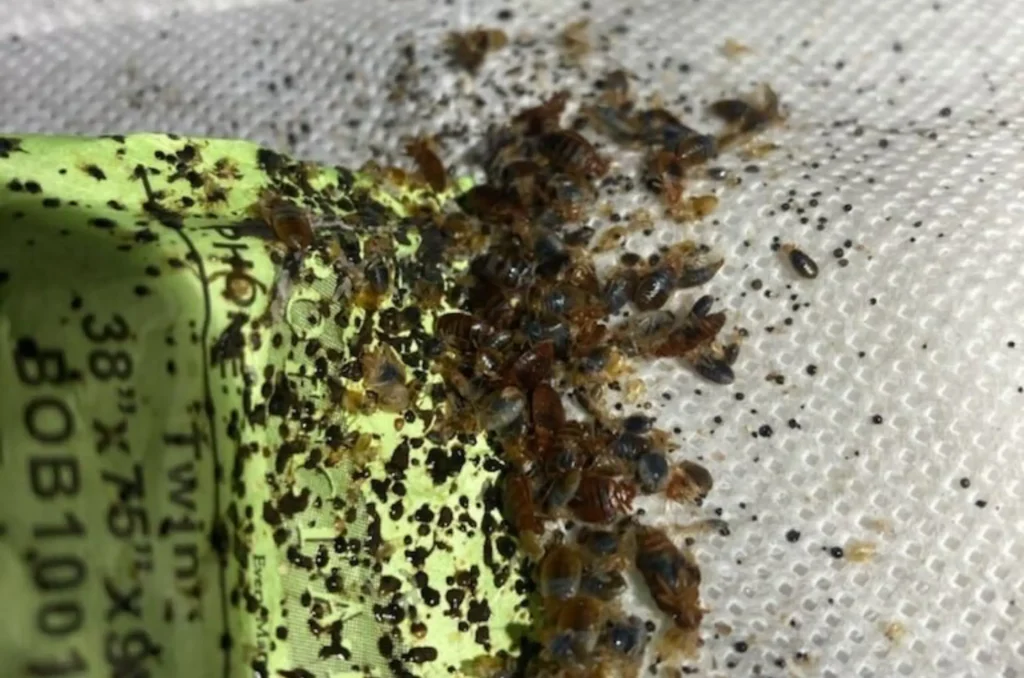
Adults: Approximately the size of an apple seed ($5$–$7$ mm). They are flat, oval-shaped, and reddish-brown. After a blood meal, their bodies become elongated and bright red.
Nymphs (Juveniles): Smaller, translucent, or whitish. They are nearly invisible to the naked eye until they feed.
The “Scent” of an Infestation
A significant bed bug presence produces a distinct odor. Homeowners often describe this as a musty, sweet smell—similar to damp towels, locker room laundry, or even the herb coriander.
How Infinite Tackles Bed Bugs
- Full Inspection: Before we start with any treatment, we begin with a full inspection of the effected areas.
- Mattress Encasements: Enclosing the box springs and mattresses with industry tough encasements.
- Live Treatment: Treating the baseboards, ceiling, windows, doors, outlets, and base of furniture.
- Dusting Treatment: Tackling cracks and crevices such as the box springs and inaccessible areas.
- Follow up: A follow up call to check in on activity, if any, is important. If needed, our team will discuss further assistance depending on infestation.
What To Know About Bed Bugs
While bed bugs are not known to transmit blood-borne diseases, their presence poses significant health and financial risks.
Financial Impact
DIY treatments often fail, leading to an “economic burden” as furniture is replaced and multiple professional treatments become necessary.
Physical Symptoms
Bites typically appear as itchy, red welts arranged in linear rows or clusters of three (often called “breakfast, lunch, and dinner” patterns).
Mental Health
The psychological toll is often the most severe side effect. Victims frequently report high levels of anxiety, insomnia, and post-traumatic stress.
Reproduction Cycle of Bed Bugs
Understanding the life cycle is key to why “one-and-done” is not always the answer.
- The Egg: Females lay 1–5 eggs daily in protected areas like mattress seams.
- The Nymph (5 Stages): Eggs hatch in 6–10 days. To progress through each of the five “instar” stages, a nymph must have a blood meal. Without food, their development stalls, but they do not necessarily die.
- The Adult: Once the final molt is complete, the bug is sexually mature.
- The Timeline: Under ideal conditions, a population can double every 16 days. A single female can lay up to 500 eggs in her lifetime.
Frequently Asked Questions About Bed Bugs
How do I check for bed bugs?
Focus your search within 8 feet of sleeping areas. Use a flashlight and a credit card to probe:
- Electrical outlets and baseboards.
- Mattress seams, piping, and tags.
- The underside of box springs (check the “dust cover” fabric).
- Headboard joints, screw holes, and wall-mounted art.
What causes bed bugs?
Bed bugs are expert hitchhikers. They do not fly or jump; they are introduced through:
- Travel: Hotels, cruise ships, and public transit.
- Second-hand items: Used furniture, mattresses, or clothing.
- Shared Spaces: Offices, laundromats, and multi-unit housing.
- Note: Bed bugs are not attracted to dirt or poor hygiene; they are attracted to human warmth and carbon dioxide.
Will bed bugs live on dogs?
No. Unlike fleas or lice, bed bugs do not live on their hosts. They prefer to hide in stationary places like furniture. They also only emerge to feed. While they may occasionally bite a dog or cat if a human is unavailable, they prefer human skin and cannot easily navigate through thick fur.
What draws bed bugs out of hiding?
Bed bugs are primarily attracted to the carbon dioxide (CO2) we exhale and our body heat. They also follow pheromone trails left by other bed bugs to find “safe” hiding spots.
What can be mistaken for bed bugs?
Many insects look similar to the untrained eye. Common “imposters” include:
Bat Bugs: Virtually identical; requires a microscope to distinguish.
Carpet Beetles: Fuzzy larvae that cause skin irritation.
Spider Beetles: Small, shiny, and round.
Cockroach Nymphs: Often found in similar dark crevices.
Additional Pest Control Services
We provide a wide range of pest control services to the residents of South West and Orlando, Florida. Whether you have bed bugs, ants, mosquitoes, spiders, fleas, cockroaches, termites, or rodents, we have the experience and expertise required to deliver superior quality service. The following are some of the pest control services that we provide:
- Residential Pest Control
- Termite Control
- Rodent Control
- Cockroach Pest Control
- Flea Control
- Ant Control
- Moles/Voles Control
- Commercial Pest Control
Our Orlando Service Locations:
- Orlando
- Clermont
- Apopka
- Windermere
- St. Cloud
- Winter Garden
- Lake Buena Vista
- Kissimmee
- Sanford
- Davenport
- Oakland
- Minneola
- Lake Nona
- Ocoee
- Longwood
- Lake Mary
- Oviedo
- Winter Park
- Altamonte Springs
Our Southwest, FL Service Locations:
- Fort Myers
- Cape Coral
- Naples
- Babcock Ranch
- Lehigh Acres
- Ave Maria
- Estero
- Bonita Springs
- Marco Island