

Did you know, in the United States, about 21 million homes fall victim to rodents in the winter season? Knowing what a mouse and rat are is key. Knowing their winter habits helps you prevent costly property damage and health risks. Many homeowners overlook common entry points and early warning signs that make homes open to these unwelcome guests. We will compare mice vs. rats and explain their winter behavior. We also highlight hidden entry points that invite nesting rodents into your home.
What Do Mice and Rats Look Like?
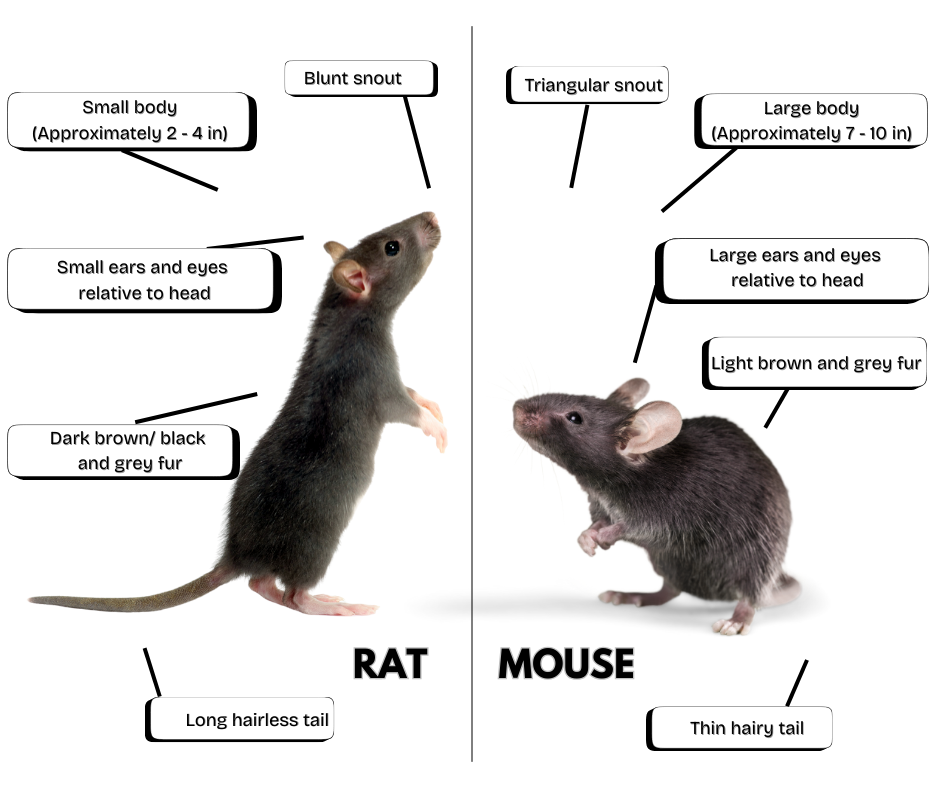
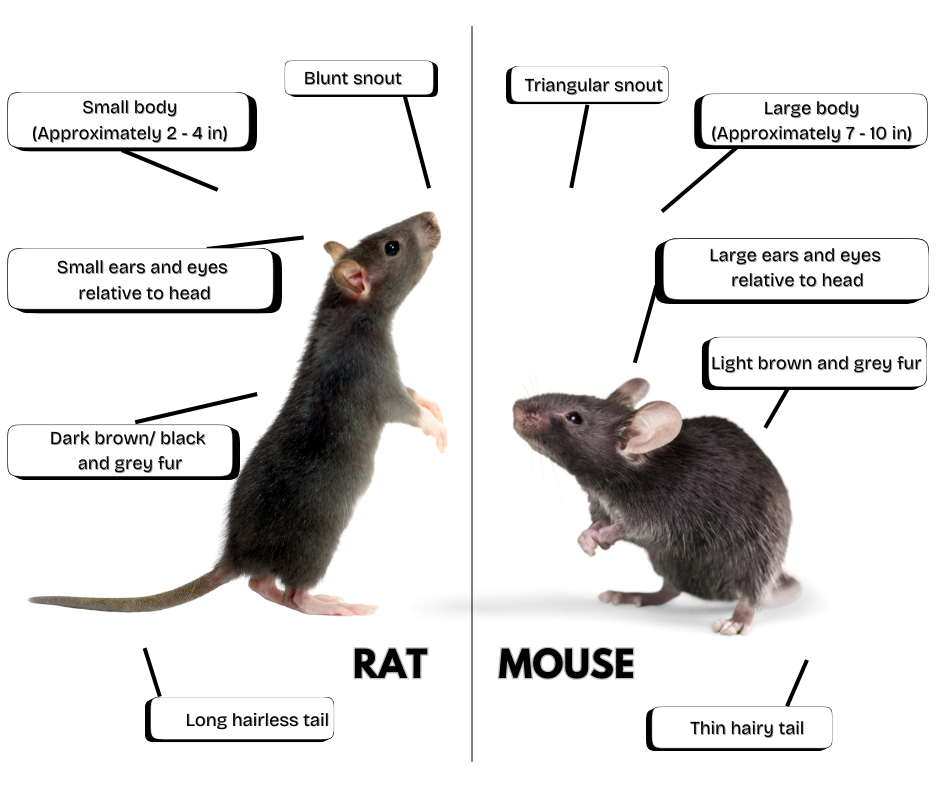
Mice and rats differ greatly in size and appearance. Knowing these distinctions is crucial for effective pest control and prevention.
Size and Body Shape:
Mice are small, slender, and under four inches long. They feature triangular heads and large ears relative to their body size.
Rats are much larger, often exceeding eight inches in body length, with a rounded muzzle and thicker, muscular build.
Tail and Feet:
Mice have thin, lightly furred tails roughly equal in length to their bodies, aiding in balance and agility. Rats have thicker, hairless, scaly tails used to regulate warmth and stability.
Rat footprints are larger and wider than the delicate, needle-like prints left by mice.
Physical traits influence how each species enters your home. These things determine where you will find signs of nesting.
Behaviors and Habits
Know how mice and rats behave when it comes to feeding and nesting.
Feeding Patterns:
Mice are nibblers who eat small amounts of food frequently throughout the day, often sampling various sources.
Rats teeth are constantly growing so gnawing is key to keep them from overgrowing. If rats teeth become overgrown, they are no longer able to eat.
Activity:
Mice are curious explorers that dart quickly and look for new objects in their habitat.
Rats exhibit neophobia — fear of new things — making them more cautious and harder to trap.
Nesting:
Mice build hidden nests like shredded paper. You often find them inside walls, cabinets, or storage bins.
Rats require larger spaces and tend to nest in crawl spaces, attics, garages, or even underground burrows.
Breeding:
Rats breed quickly with having up to 8 newborns every 60 days. After 60 day they are ready to conceive again
Mice reproduce twice as fast every 30 days with about 10-12 new borns every month.
Signs of Rodent Activity to Watch for in Colder Months
Rodents seek warmth as temperatures drop, making late fall and winter prime times for nesting. Watch for these telltale signs:
Droppings:
Mouse droppings are small, rice-shaped pellets with pointed ends, scattered widely.
Rats leave large, clusters of waste near food sources, unlike the scattered pellets of mice.
Gnaw Marks and Structural Damage:
Look for small, dime-sized holes or chew marks for mice, and larger quarter-sized damage from rats. Rats can chew through wood, plastic, and even soft metals, creating serious structural risks.
Sounds and Smells:
Scratching or scurrying noises inside walls or ceilings at night can reveal rodent movement. A strong ammonia-like odor may also indicate urine build up.
Ignoring Entry Points:
Our field evaluations reveal a common trend: most homeowners overlook entry points that rodents exploit daily.
- Open gaps around roof edges and vents
- Tree branches or shrubs touching the roof, providing easy access
- Unsealed cracks near doors, windows, plumbing, or electrical lines
- Broken screens or damaged weather stripping
These entry points become even more critical in colder months when rodents are actively searching for shelter.
Health Risks Associated with Rodents
Rodents are not just a nuisance; they pose many health hazards. They carry bacteria and viruses such as salmonella, leptospirosis, and hantavirus, which can infect food and surfaces. Their droppings and urine can trigger allergies and breathing issues in children or sensitive individuals. Early detection and control are vital to protect your family’s health.
Common Mistakes and Overlooked Problems in Rodent Prevention
Many homeowners focus on obvious signs inside the house but overlook key prevention steps:
- Ignoring roof and attic access points — rodents often enter from above
- Allowing tree branches and vegetation to touch the home on the outside, creating bridges
- Missing small gaps around utility pipes, vents, and doors
- Failing to address clutter, which provides shelter and nesting materials
- Not storing food properly or leaving pet food accessible overnight
These oversights can quickly turn a small rodent presence into a bigger issue.
Effective Prevention and Measures
Taking proactive steps can greatly reduce your risk:
Seal Entry Points:
Use steel wool, metal flashing, or concrete to close gaps larger than a quarter inch. Pay special attention to roof edges, vents, and where utility lines enter the home.
Maintain Vegetation:
Trim tree branches and shrubs away from the house to ride of easy access routes.
Keep Your Home Clean and Clutter-Free:
Store food in sealed containers, clean up crumbs promptly, and reduce clutter inside and outside your home.
Rodent Control with Infinite:
For thorough protection, rely on experts who can spot species, inspect for access points, and implement a tailored treatment plan. Learn more about our complete rodent services.
Conclusion
Mastering rodent behavior is the first line of defense. You must distinguish between mice and rats to secure your home before the winter. Many homeowners overlook critical issues like roof gaps and tree branches touching the home, which can easily invite rodents inside.
Protect your property by sealing entry points and keeping a clean home. Inspecting hidden areas prevents costly damage and keeps your family safe. If you suspect rodent activity or want a expert, don’t hesitate to reach out to Infinite for help.
Our Southwest, FL Service Locations:
- Fort Myers
- Cape Coral
- Naples
- Babcock Ranch
- Lehigh Acres
- Ave Maria
- Estero
- Bonita Springs
- Marco Island
- Sanibel Island
Our Orlando Service Locations:
- Orlando
- Clermont
- Apopka
- Windermere
- St. Cloud
- Winter Garden
- Lake Buena Vista
- Kissimmee
- Sanford
- Davenport
- Oakland
- Minneola
- Lake Nona
- Ocoee
- Longwood
- Lake Mary
- Oviedo
- Winter Park
- Altamonte Springs