
Ticks vs Bed Bugs – How to Tell the Difference and More

When tiny bugs show up in your bed, it can feel like you’re living in a nightmare. Two common culprits are ticks and bed bugs. These blood suckers are often confused because of their size and the irritation they cause. But these pests behave very differently, and knowing the difference is essential for both your peace of mind and your health.
<img decoding=

Can a tick look like a bed bug?

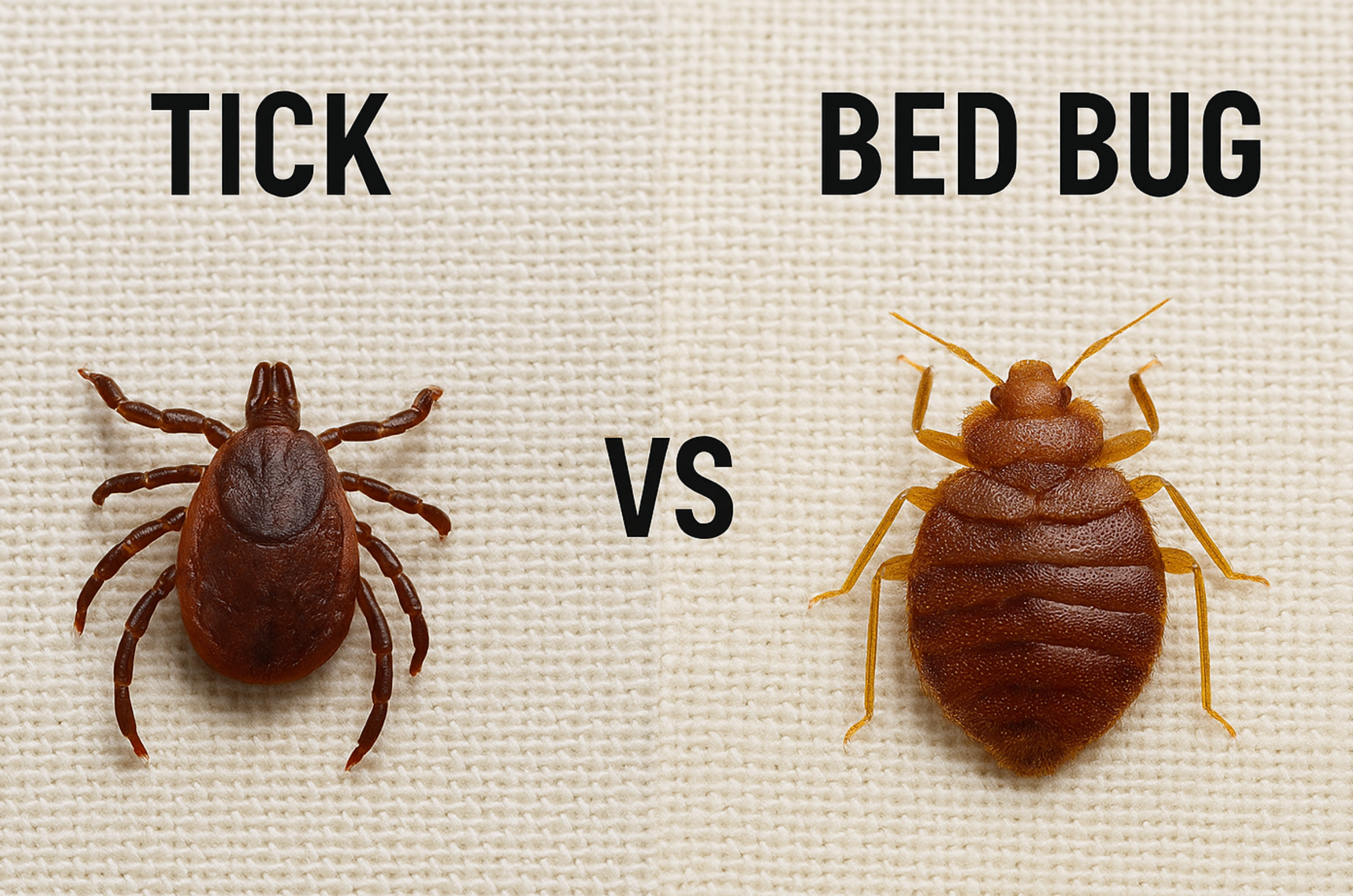
Yes, at a quick glance, ticks and bed bugs can look similar. Both are small, flat, and reddish-brown. However, ticks usually have a harder, more rounded body and visible legs that extend outward from the sides. Bed bugs are flatter, more oval-shaped, and their legs are tucked beneath the body, making them less obvious.

How do you tell if it’s a tick or a bed bug?

The fastest way to tell the difference is by where you find them and how they behave:

Ticks

  • Have 8 legs (arachnids).
  • Parasites that latch onto skin and feed on blood for hours or days.
  • Move slow.
  • If attached to you or your pet, it’s most likely a tick.

Bed bugs

  • Have 6 legs (insects).
  • Don’t stay attached.
  • Come out at night, bite quickly, and scurry.
  • Retreat back into cracks, crevices, wall art, lamp shades, bedding, etc.

Can ticks live in mattresses?

Ticks typically do not infest mattresses. Instead, they live outdoors in tall grass, shrubs, or wooded areas where they can latch onto passing hosts. While a tick might end up in your bed if carried inside by a person or pet, they won’t establish colonies in mattresses the way bed bugs do.

Do ticks crawl in bed?

Ticks can crawl into a bed if they hitchhike on clothing, pets, or people, but this is not their natural habitat. Unlike bed bugs, ticks don’t seek out beds or bedding. If you find bugs crawling around your sheets, bed bugs are the more likely culprit.

Do bed bug bites look like tick bites?

Yes, the bites can look similar, but there are differences:

Bed bug bites

  • Usually appear in clusters or straight lines,
  • Often on arms, legs, or exposed skin.
  • Itchy and red.

Tick bites

Which is more dangerous—ticks or bed bugs?

Ticks

Ticks propose more of a threat due to the health risks they can spread such as Lyme Disease.

Do ticks bite at night like bed bugs?

Ticks don’t have a specific time they bite—they latch on whenever they find a host. Bed bugs, on the other hand, are nocturnal and prefer to feed while you’re asleep at night.

What should you do if you find a tick or bed bug?

Ticks

Bed bugs

  • Contact us directly or text us directly by clicking the green chat bubble at the bottom right of your screen.
  • Look for additional signs like blood spots on sheets, shed skins, or fecal stains.

While ticks and bed bugs may seem similar at first, they behave very differently. Ticks are outdoor parasites that pose health risks, while bed bugs are indoor pests that cause nuisance infestations. Learning to spot the differences can help you take quick action—whether that’s removing a tick properly or calling Infinite Pest Solutions, we are here to help!

Why Are Florida Pests More Active During Summer

What You Need to Know

Summer in Florida isn’t just about beach days and thunderstorms. It’s also peak season for insects invading our homes. And although it may be ending soon, the war against pests lasts year round.  Homes near nature or under construction often see the worst of it, but pretty much everyone is affected. If you’ve been wondering why are pests more active this summer, you’re not alone. Here’s the inside story — and some tips to keep them under control.

What the News Is Saying

Recently, Gulf Coast News published a report titled Florida insects invade homes to escape the heat, showing that Infinite Pest Solutions is getting a LOT more calls this season. 

Some of the main takeaways:

  • Bugs are seeking relief from extreme heat and rainstorms. When outdoor conditions get too hot or wet, insects like ants, palmetto roaches, spiders, millipedes, silverfish, earwigs, etc., move indoors. 
  • Rain can flood ground-level habitats, pushing pests to higher, dryer “safe zones” — often our houses. 
  • Prevention is key: sealing cracks and gaps, treating foundations, windows and doors, soffits, around plumbing and electrical penetrations — experts emphasize treating all possible entry points. 

Why Pests Are More Active in Summer

Heat & Temperature Stress

Insects are poikilothermic (cold-blooded) — they can’t regulate their internal body temperature. When external conditions get too hot, they seek cooler refuge. 

Humidity & Rain

Summer in Florida often means high humidity and heavy downpours. Rain may submerge or flood insect habitats, forcing them to move. Moisture also supports breeding for many species. 

Faster Life Cycles / More Activity in Warm Weather

Warm temperatures speed up metabolism, breeding, and activity. More food, more movement, more chances for them to invade structures. Gulf Coast News quotes entomologists saying insects “develop faster and are much more active” in warm weather. 

Shelter / Shade / Dry Spaces

As outdoor heat rises, shade and cool spots become more desirable. Homes often offer all three: cooler temperatures inside (or at least relatively cooler), shaded porches, crawlspaces, etc.

Entry Points & Human Behavior

Windows/doors open more often, cracks & gaps may expand under heat, water leaks or plumbing penetrations, outdoor lighting attracting insects, yard debris near foundation.

Summer Pest Control:

What Works and What You Can Do For You

Because pest activity ramps up so much in the summer, your pest control strategy should be more proactive.

Some professional tips:

  1. Seal up entry points: doors, windows, around plumbing/electrical, soffits, cracks in foundation.
  2. Remove yard debris, standing water, leaf litter. Clean up wet mulch or wood piles.
  3. Don’t leave out food or pet food; keep garbage sealed.
  4. Use proper foundation treatments: perimeter sprays (foundations, windows, doors) and treat around light fixtures and plumbing penetrations.
  5. Regular inspections/pest services especially after rainstorms or flooding.
  6. Keep vegetation trimmed away from the house; limit moist/shaded zones close to the building.

Does Construction Cause More Pests?

The answer is yes.

There are several reasons why including:

  • Disturbance of Habitat: Construction can destroy or disturb the natural habitat of insects (soil, debris, etc.), pushing them toward homes.
  • New Entry Points: Construction often leaves gaps, openings, unsealed spaces before finishing. This gives pests easy access.
  • Moisture and Soil Exposure: Digging, grading, laying plumbing or foundations can expose moist soil, create puddling, or water retention, all attractive to pests.
  • Landscaping Changes: Removing trees, changing slopes, installing mulch, etc., can change water flow and shade, creating inviting microhabitats.

Florida’s long, hot, and humid summers create the perfect storm for pest activity. From mosquitoes and termites to cockroaches, ants, and even silverfish, insects are driven indoors in search of cooler temperatures, moisture, and food. Add in the impacts of heavy rain and ongoing construction, and it’s no surprise that more homeowners are noticing unwanted guests this season.

The good news is that with proactive summer pest control — sealing entry points, reducing moisture, and scheduling routine professional treatments — you can keep your home protected before infestations take hold. Staying ahead of the problem not only keeps your living space comfortable but also prevents costly damage down the road.

At Infinite Pest Solutions, our team understands the unique challenges Florida homeowners face during summer. Whether pests are sneaking in to beat the heat or stirred up by nearby construction, we have proven, pet-friendly solutions to keep your home pest-free all year long.