

Key Takeways
- Different light sources attract different pests
- Certain pests are more attracted to light
- Artificial light attracts nocturnal insects
- Leaving your lights on causes more bug build up around the home
- Certain lighting can help reduce pest activity
Did you know most nocturnal insects are drawn to artificial light sources, especially those with
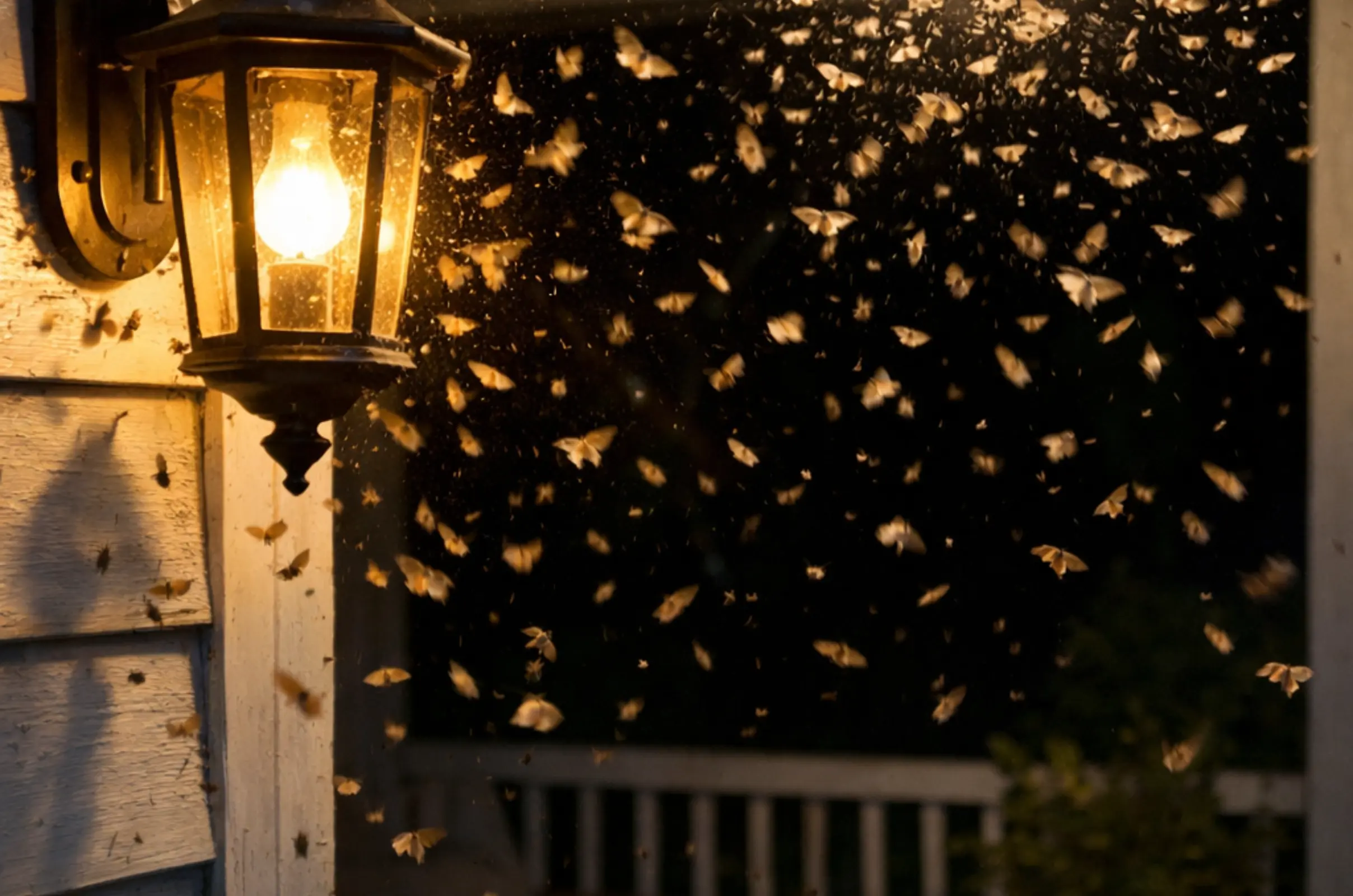
positive phototaxis (meaning they move towards light)? This natural behavior can turn your inviting outdoor lighting into a hotspot for pests at night, creating discomfort and potential issues around your home. Understanding why outdoor lights attract pests — and how to reduce their presence — is key to maintaining a pleasant outdoor environment.
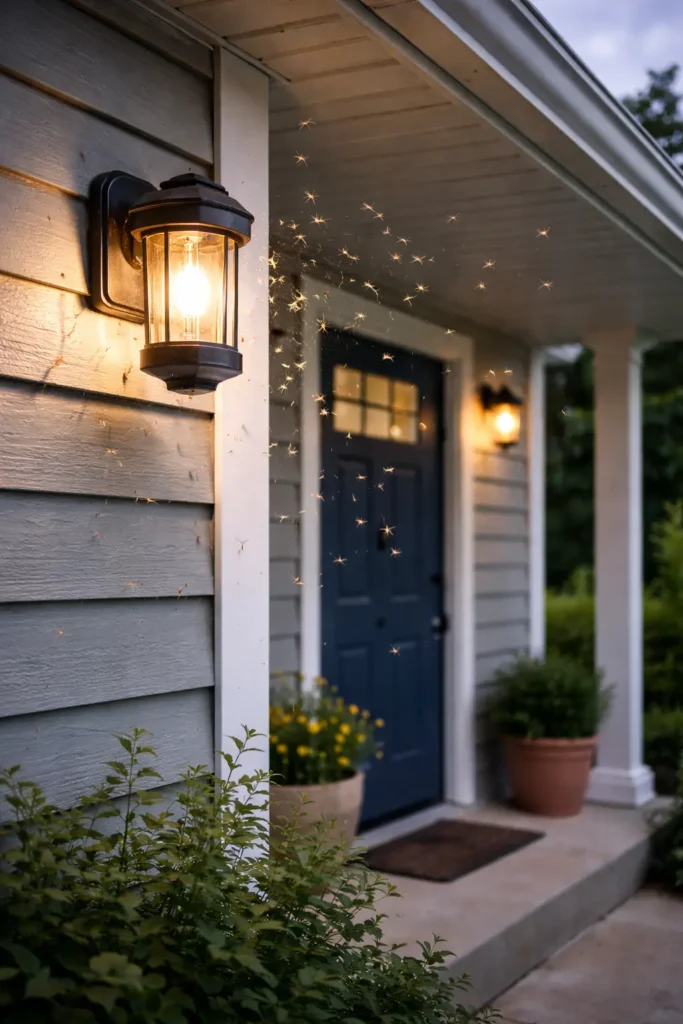
If you’ve noticed buzzing moths, swarms of gnats, spider webs near entryways, or insects gathering around your doors and windows at night, your outdoor lighting might be the hidden cause. Understanding why this happens—and how to fix it—can help you enjoy your outdoor spaces pest-free.
Why Are Pests Attracted to Outdoor Lights?
Most flying insects rely on natural light cues, like the moon and stars, to navigate at night. Artificial outdoor lighting disrupts these natural navigation systems, confusing insects and causing them to spiral around light sources. This behavior creates concentrated pockets of insect activity near your home.
Beyond just light, the heat emitted by some bulbs also attracts warmth-seeking pests. Reflective surfaces like glossy paint, windows, or bright exterior finishes amplify this effect by scattering light further, widening the zone where insects detect and are drawn toward your home.
Common pests attracted to outdoor lights include:
- Moths
- Gnats and midges
- Beetles
- Flying ants
- Mosquitoes
Once these insects gather, they attract secondary pests such as spiders, wasps, lizards, and even rodents, creating a chain reaction that increases overall pest activity.
How Specific Lighting Choices Influence Pest Attraction
Not all lights are created equal when it comes to pest attraction:
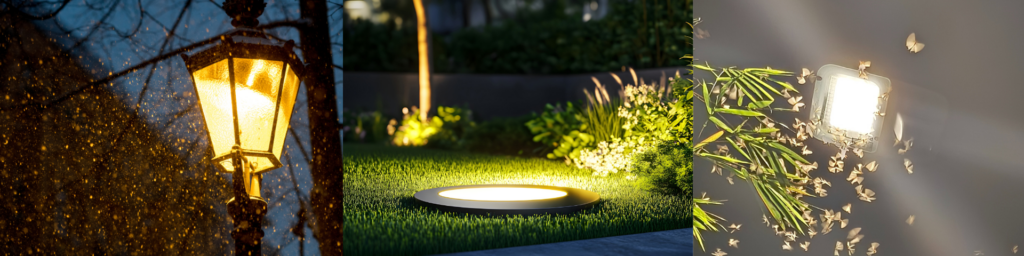
- Cool white or blue-toned bulbs tend to attract more insects than warm yellow or amber lighting.
- High-heat bulbs (incandescent or halogen) draw pests seeking warmth.
- Recessed or soffit lighting traps heat and provides shelter, making these fixtures hotspots for insects. Their placement along rooflines funnels airflow, pushing insects directly into these lit, protected areas.
- Light colors and home exterior finishes also matter—light-colored, glossy, or reflective surfaces increase light scatter, attracting insects from farther away. Conversely, darker colors absorb heat, attracting warmth-loving pests.
Environmental Factors That Boost Insect Activity
Homes near water sources like lakes, canals, ponds, or wetlands experience significantly higher insect activity. These moisture-rich environments provide ideal breeding grounds for mosquitoes, flies, gnats, and midges. Seasonal hatch cycles can result in massive swarms, especially around outdoor lighting at dusk.
Warm, humid air traps scent molecules, carrying insects directly onto residential properties. Water reflections intensify light’s glow, increasing its attractiveness to pests emerging from nearby breeding sites.
Practical Lighting Solutions to Reduce Pest Problems
Fortunately, you can take several effective steps to minimize insect attraction:
- Switch to Warm, Pest-Resistant Bulbs
Use yellow, amber, or warm-colored LED bulbs that emit wavelengths less attractive to insects. These bulbs also generate less heat. - Install Motion-Activated or Dimmable Lights
Reduce the time lights are on to limit attraction signals. Motion sensors activate lighting only when needed, and dimmable fixtures lower brightness during low-traffic periods. - Use Downward-Facing or Shielded Fixtures
Shielded lights direct illumination where you want it—downward and away from open spaces—minimizing glow that attracts insects from a distance. - Reposition Lights Away From Doors and Windows
Place lighting farther from entry points to keep pests from congregating near your home’s access areas. - Keep Fixtures Clean and Sealed
Regularly wipe away dust and dead insects, and seal gaps around mounting points to prevent pests from nesting in protected spots.
Complementary Home Maintenance to Control Pests
Lighting adjustments alone aren’t always enough, especially in humid climates like Florida’s. Maintain your property to reduce pest habitats:
- Eliminate standing water in gutters, flowerpots, buckets, and irrigation systems to stop mosquito breeding.
- Trim overgrown shrubs and grass to reduce cool, shaded shelter areas for insects.
- Clean debris and leaf piles where pests hide and reproduce.
- Repair window screens, door seals, and soffit vents to block pest entry points.
Understanding the Role of Midges and Other Nuisance Pests
Midges, common around water, don’t bite or transmit disease but can form dense swarms that interfere with outdoor enjoyment. Large midge populations attract predators like spiders and lizards, which can lead to secondary pest problems such as webs and droppings near your home.
Early prevention—through lighting choices, maintenance, and pest control—helps minimize these nuisance swarms and their impact.
Why Professional Pest Control Makes a Difference
For persistent or large-scale pest challenges, professional pest management is invaluable.
Our Experts:
- Identify hidden pest entry points and breeding sites.
- Develop tailored perimeter treatments that reduce insect populations year-round.
- Provide seasonal strategies for homes near water or with heavy outdoor lighting.
- Offer advice on lighting, landscaping, and maintenance to complement treatments.
Combining professional services with homeowner efforts creates a comprehensive defense that keeps your home more comfortable and pest-free.
Final Thoughts: Balancing Outdoor Lighting and Pest Prevention
Outdoor lighting is essential for safety and aesthetics, but it can unintentionally invite pests. By choosing the right bulbs, powering lights strategically, maintaining your property, and partnering with our pest control professionals, you can enjoy well-lit, beautiful outdoor spaces without the swarm of insects and build up.
If pest activity around your home is overwhelming, the team at Infinite Pest Solutions is ready to help. Contact us today for a customized pest control plan designed to protect your home and enhance your outdoor living experience.
Our Orlando Service Locations:
- Orlando
- Clermont
- Apopka
- Windermere
- St. Cloud
- Winter Garden
- Lake Buena Vista
- Kissimmee
- Sanford
- Davenport
- Oakland
- Minneola
- Lake Nona
- Ocoee
- Longwood
- Lake Mary
- Oviedo
- Winter Park
- Altamonte Springs
Our Southwest, FL Service Locations:
- Fort Myers
- Cape Coral
- Naples
- Babcock Ranch
- Lehigh Acres
- Ave Maria
- Estero
- Bonita Springs
- Marco Island