Pest Control 101: What to Expect, What’s Covered, How to Prepare

Did you know that nearly 1 in 5 homes in the United States experience some form of pest infestation annually? Pests not only damage property but also pose health risks to your family.  If you’ve never had professional pest control before, it’s normal to have questions. Homeowners often ask what pest control actually includes, what happens during the first visit, and whether they need to do anything ahead of time.

The good news is that pest control doesn’t have to be complicated. Understanding how it works can help you get better results and feel more confident about the process.

Here’s a breakdown of what you should know before your service.

How Do I Prepare My House for Pest Control?

In most cases, preparation is minimal. Pest control works best when technicians can easily access the areas pests are most active. For specific pests like German cockroaches, cleanliness is essential for successful elimination. Ensure that pantry areas are free of food debris, spills, and clutter, as this helps treatments work more effectively. You can learn more about what homeowners can do here like german roaches.

While deep cleaning your entire home isn’t needed prior to a service, a quick tidy-up makes it easier for treatments to reach the right areas and helps ensure nothing blocks access to key entry points.

Before your appointment, it helps to:

  • Clear clutter away from baseboards to allow technicians full access for treatment
  • Secure pets and let the technician know if you have any concerns
  • Take note of where you’ve seen pest activity so you can point it out
  • Take photos of pests you have concerns about so a technician can better identify 
  • Ensure counters are clear of crumbs and debris in the event bait is needed

What Are Common Pest Control Services?

Typical pest control services address a range of common pests. Regular maintenance visits include inspections to catch early signs of infestation and preventive treatments to keep pests at bay year-round. Some of the most common services Infinite Pest Solutions include are:


What Does Normal Pest Control Cover?

General pest control typically covers the pests homeowners encounter most often. This usually includes:

  • Ghost ants 
  • Fire ants 
  • Big headed ants 
  • Carpenter ants 
  • White footed ants 
  • Odorous ants 
  • Argentine ants 
  • Palmetto Cockroaches 
  • Wasps/Hornets 
  • Centipedes 
  • Millipedes  
  • Silver fish 
  • Spiders 
  • Earwigs 
  • Crickets  
  • Sow bugs 

These services focus on treating entry points, nesting areas, exterior foundation, and high-traffic pest zones around the home such as soffits. The goal is to rid of what exists around the home and keep a protective barrier around the exterior of the home to prevent any new pests.


What Does Pest Control Do on a First Visit?

The initial visit is one of the most important parts of pest control. This is when the technician will perform a detailed inspection of the interior and exterior to assess pest activity and identify entry points. Following this, the technician will present a tailored treatment plan addressing your home’s specific needs. 

The initial treatment involves barrier applications outside, an interior application, crack and crevice treatments, and removal of wasps/hornets nests or webs. Ongoing maintenance and follow-up visits help to ensure pest-free results especially in warm and humid climates where pests stay active year-round.


Why Ongoing Pest Control Matters

Many pests don’t disappear after a single treatment. Ant colonies, spider populations, and other infestations often rebuild especially if conditions remain favorable.

Routine pest control helps:

  • Keep pests from returning
  • Prevent new activity 
  • Maintain a protective barrier around your home
  • Eliminate the source of reproduction

Preparing for pest control doesn’t have to be stressful, and knowing what to expect makes the process smoother from the start. From understanding what’s covered to knowing what happens on the first visit, a little information goes a long way.

At Infinite Pest Solutions, we know that professional pest control is about more than just removing pests, it’s about protecting your home, preventing future issues, and giving you peace of mind. Get a free quote today!

Our Southwest, FL Service Locations:

5 Common Types of Red Ants and How to Manage Them

Red ants are more than just an everyday nuisance. Depending on the species, they can damage landscaping, invade homes, cause painful stings, and even create health and safety concerns. In fact, red imported fire ants alone cause more than $6 billion in damage each year across the United States, according to the USDA.

Knowing which type of red ant you’re dealing with is key to choosing the right prevention and control strategy. Below are five common red ant species homeowners encounter and what it typically takes to manage them effectively.


1. Red Imported Fire Ants

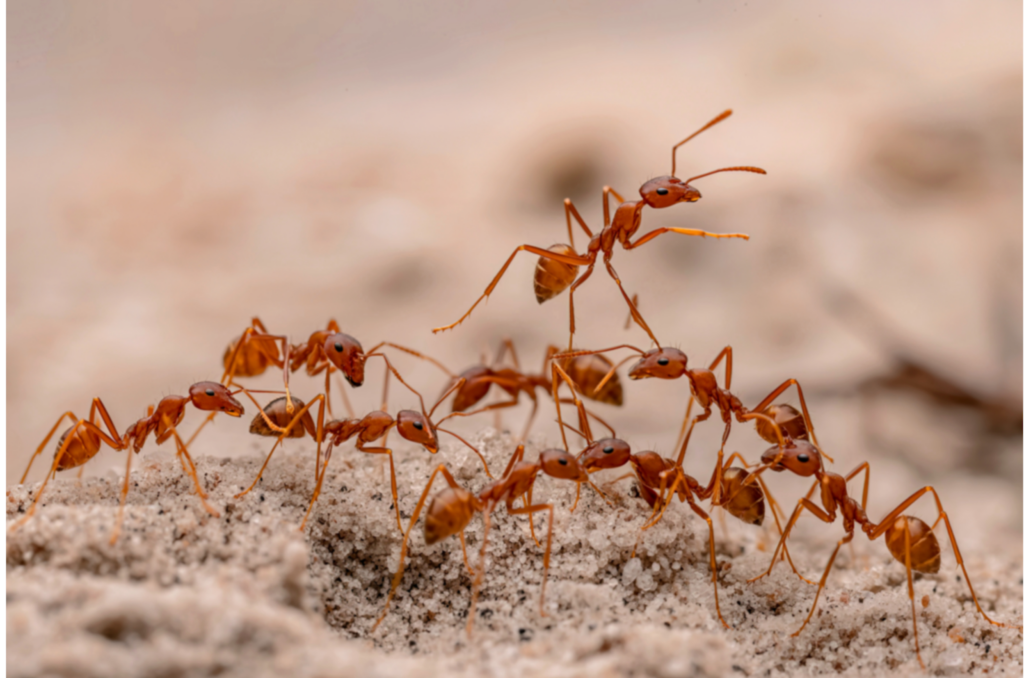
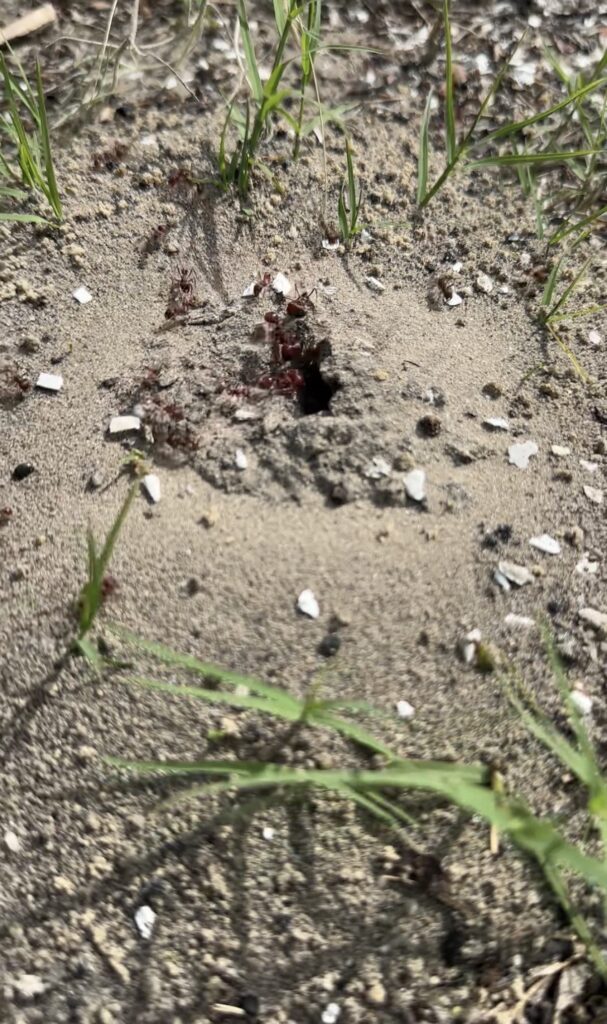
Fire ants are one of the most aggressive red ant species. They’re typically reddish-brown and range from about 1/8 to 1/4 inch long. Fire ants build large, dome-shaped mounds, sometimes up to 18 inches wide, and will swarm quickly if their nest is disturbed.

Why they’re a problem:
Fire ants deliver painful stings that can cause burning, itching, and, in some cases, severe allergic reactions. Their mounds also make yards unsafe for pets, children, and outdoor activities.

How to manage them:
Avoid disturbing mounds, as this can make the problem worse. Fire ants usually require professional, colony-level treatments that target the queen and underground nest to prevent reinfestation.


2. Carpenter Ants (Red Varieties)

Carpenter ants are larger ants, sometimes reaching up to 5/8 inch long. They may appear red, black, or a combination of both. While they don’t sting, carpenter ants can cause serious structural concerns.

Why they’re a problem:
These ants tunnel through wood to build their nests, often targeting moist or damaged areas of a home. Over time, this activity can weaken wood structures.

How to manage them:
Look for signs like sawdust-like debris or hollow-sounding wood. Reducing moisture, repairing damaged wood, and locating the main nest are critical. Severe infestations typically require professional treatment.


3. Tawny Crazy Ants

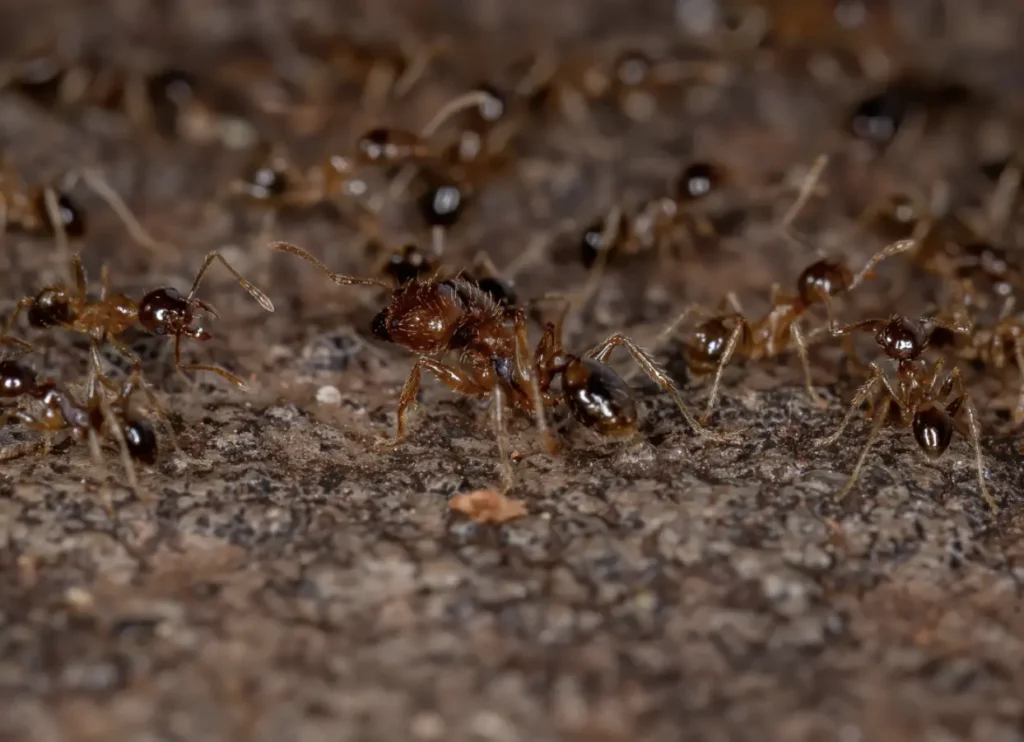
Tawny crazy ants are named for their erratic, fast movement. They’re about 1/8 inch long and have long legs and slightly hairy bodies. This species has become increasingly problematic in Gulf Coast states, especially Florida.

Tawny Ants

Why they’re a problem:
They’re attracted to electrical equipment and wiring and have been known to cause short circuits and equipment failures. They also form large colonies that are difficult to control.

How to manage them:
Sealing entry points and reducing moisture can help, but tawny crazy ants are highly resilient. Professional pest control is often necessary to manage infestations effectively.


4. Leaf-Cutter Ants

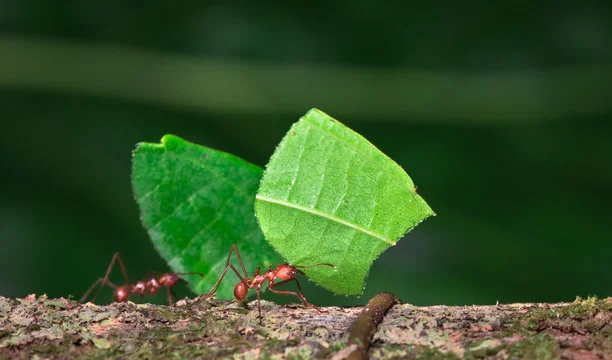
Leaf-cutter ants are some of the most recognizable red ants due to their habit of carrying pieces of leaves. These ants range in size from 1/8 to 5/8 inch and use the leaves to cultivate fungus underground.

Leaf Cutter Ants

Why they’re a problem:
They can defoliate trees, shrubs, and ornamental plants very quickly, causing significant landscaping damage.

How to manage them:
Physical barriers and targeted treatments can help protect plants, but established colonies usually require professional intervention to prevent ongoing damage.


5. Big-Headed Ants

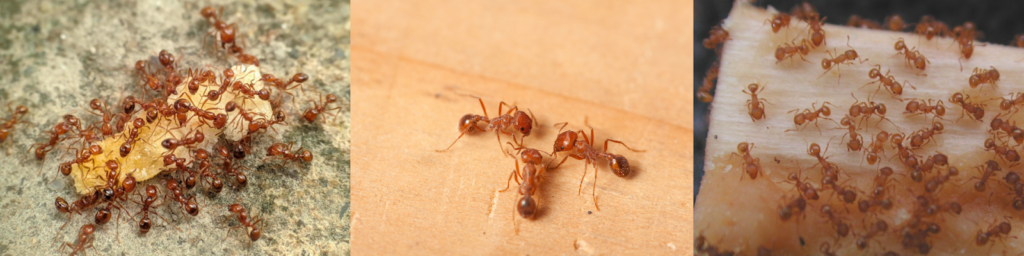
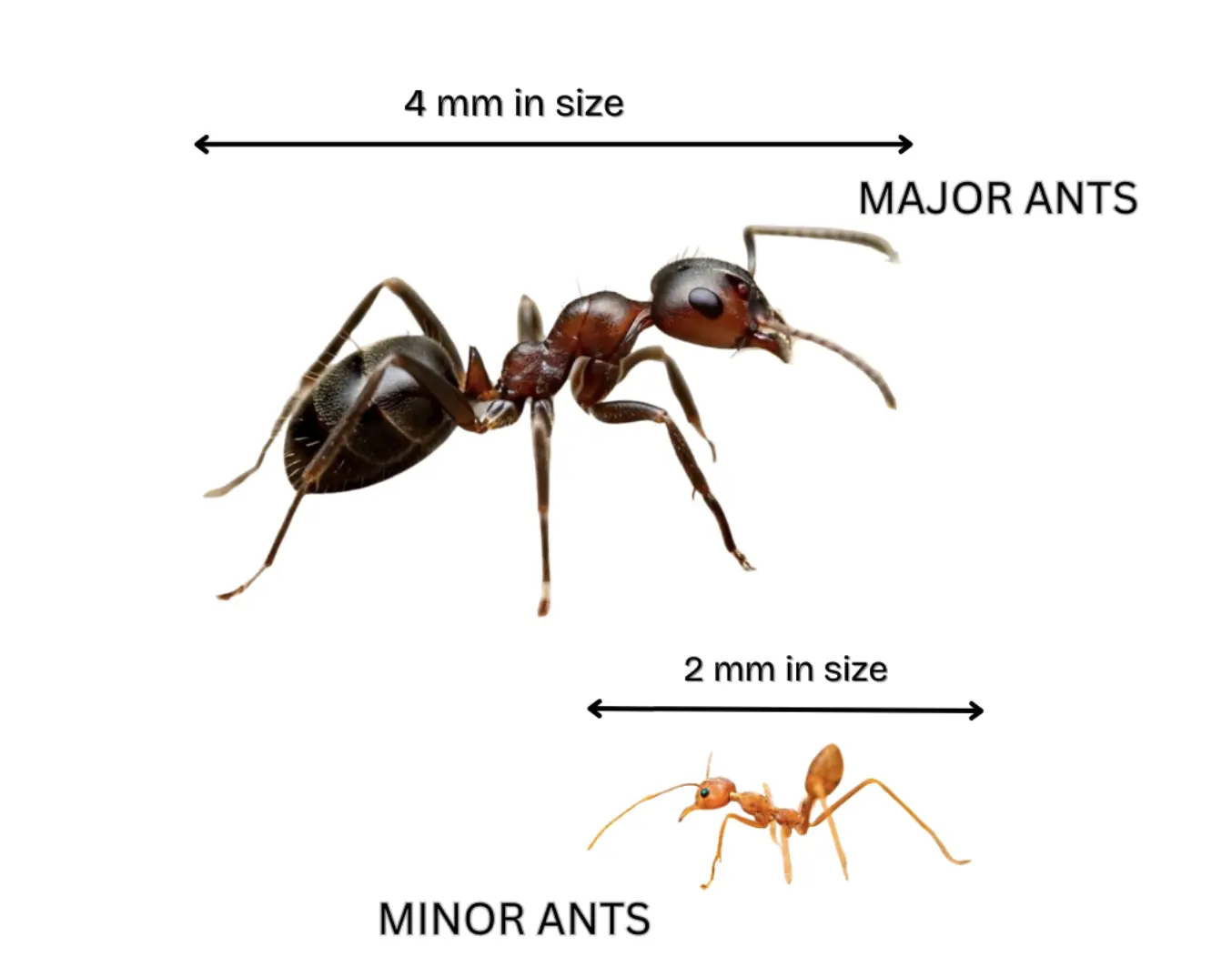
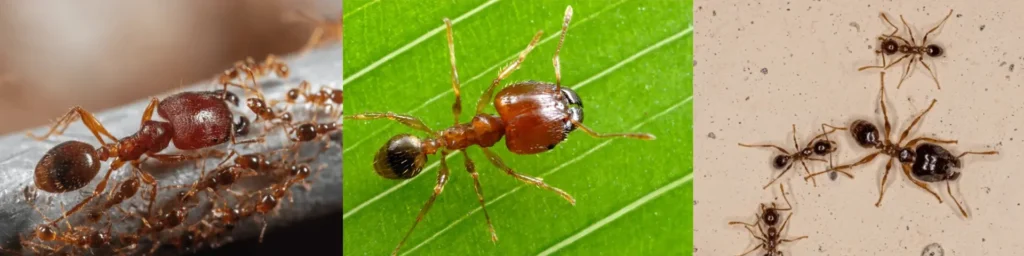
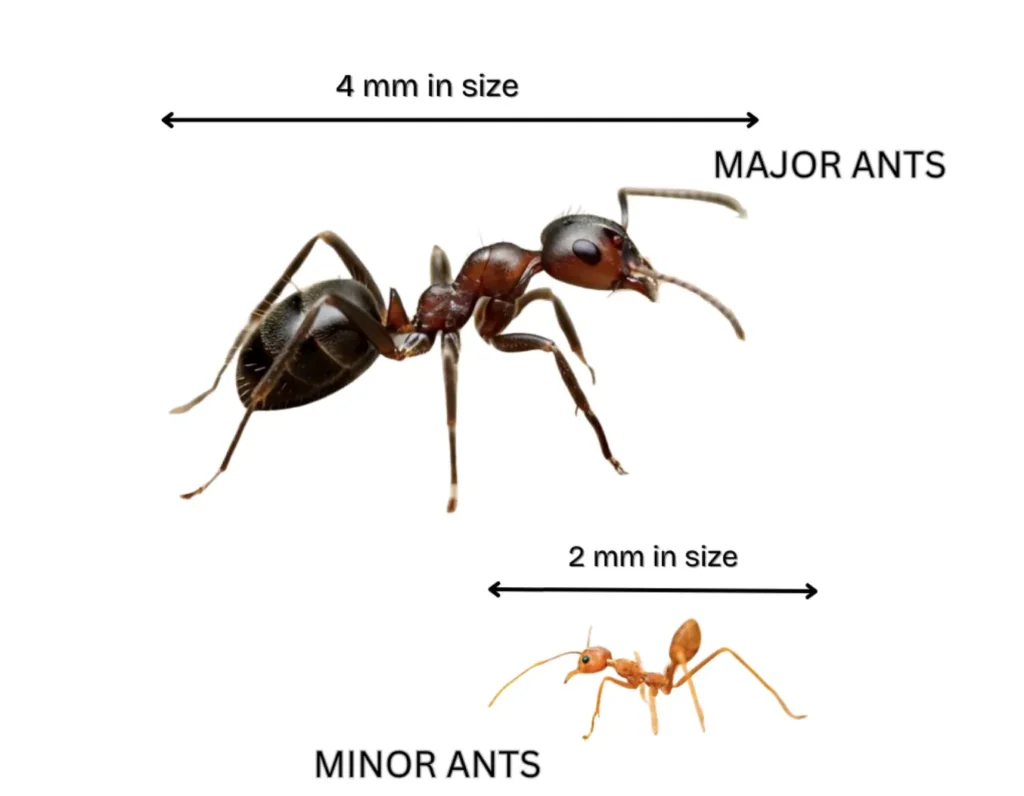
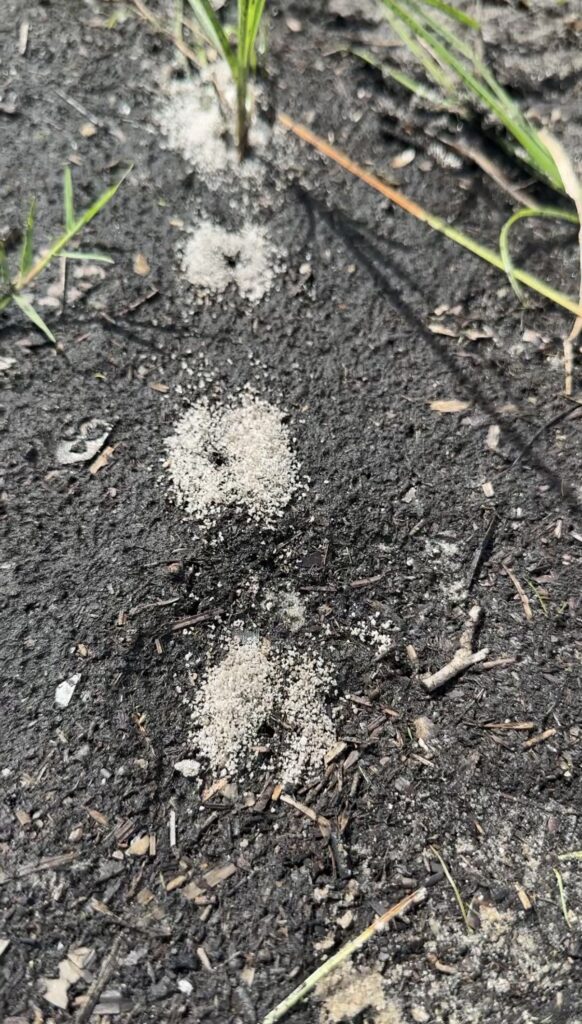
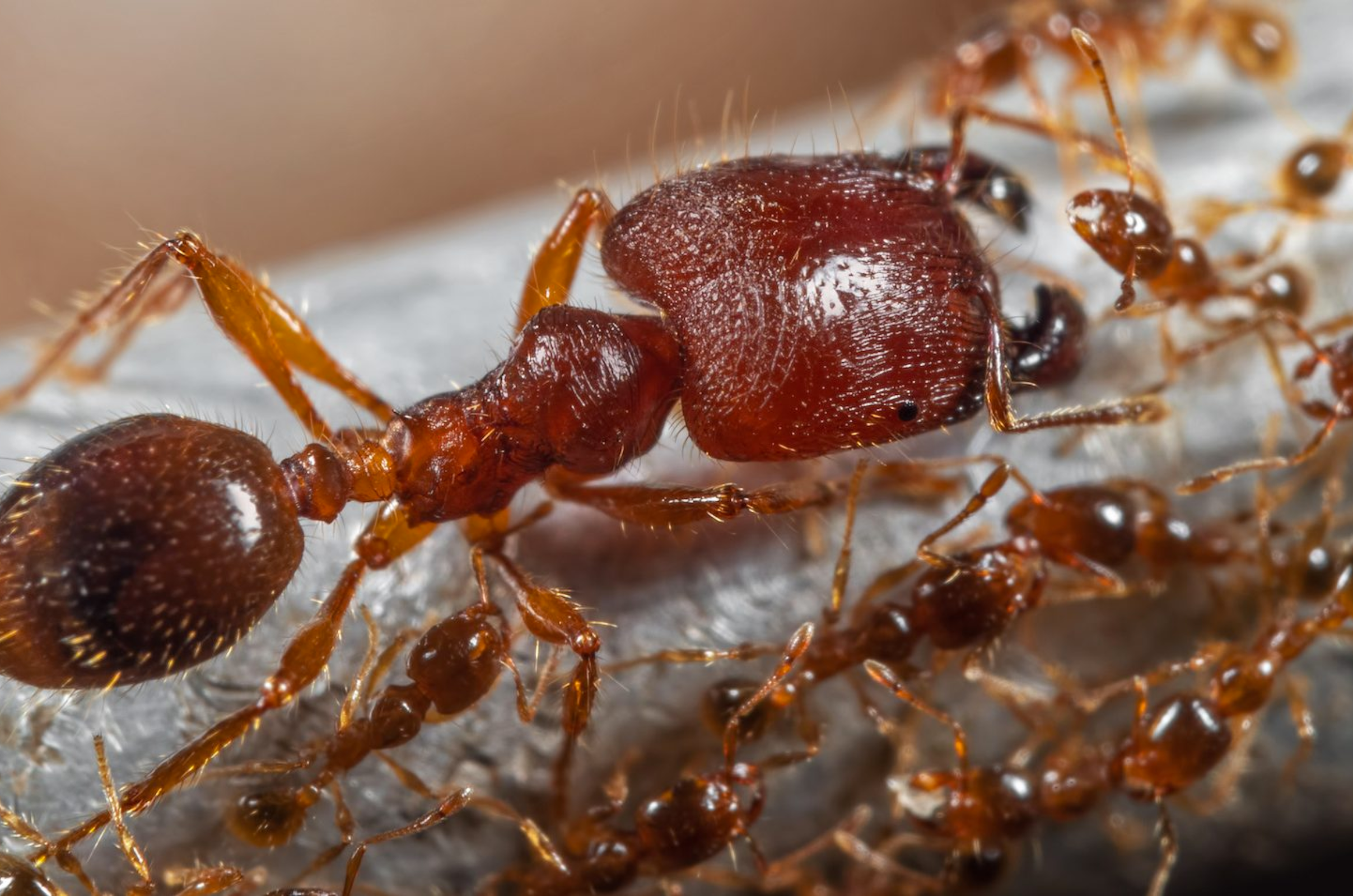
Big-headed ants, although can be a reddish color, and often mistaken as fire ants. They are named for the oversized heads of their major workers. They typically range from 1/8 to 1/4 inch long and nest in soil, often leaving behind small piles of displaced dirt.

Big Headed Ants

Why they’re a problem:
These ants form large colonies with multiple queens and frequently invade homes in search of food and moisture. A single treatment rarely eliminates the entire colony.

How to manage them:
Sealing cracks, reducing moisture, and maintaining cleanliness can help, but persistent infestations usually require specialized pest control strategies.


Why Red Ants Keep Coming Back

Many red ant species form large or hidden colonies, which means killing visible ants doesn’t address the source of the problem. These colonies can spread over large areas, sometimes multiple blocks or neighborhoods. Without eliminating the nest and queen, ant activity often returns, sometimes worse than before.

Treatments bought from the store may offer short-term relief, but surviving nests nearby can repopulate areas, leading to reinfestation if not addressed thoroughly. Professional pest control focuses on identifying the species, targeting the colony, and preventing future infestations.

At Infinite Pest Solutions, we provide customized ant control plans designed to eliminate red ants and prevent them from coming back. Whether you’re dealing with fire ants, carpenter ants, or large multi-queen colonies, our technicians have the experience to help.

Our Southwest, FL Service Locations:

Identifying Big Headed Ants A Homeowner’s Guide

Big headed ants are the culprit to those odd looking any colonies. If you see a colony of small ants with a few of them that are larger in size and have a big head, you’re dealing with big headed ants.

Did you know that invasive species like ants cause billions of dollars in property damage worldwide every year? According to the Invasive Species Specialist Group, big headed ants (Pheidole megacephala) rank among the top 100 worst invasive species globally, wreaking havoc on ecosystems and homes alike. If you suspect you have these destructive pests, it’s important to understand why getting rid of these ants can be so challenging, and why only one treatment will not solve your big headed ant problem.

Big headed ants

What Are Big Headed Ants?

Big headed ants are small but formidable insects, measuring between 2 and 4 millimeters in length. They get their name from the soldier ants’ disproportionately large heads, which can be nearly half the size of their bodies. Their coloration ranges from red-brown to black, and they have distinct physical traits including two spines on their waists and long, sparse hairs covering their bodies.

What sets big headed ants apart from other ant species is their complex social structure. Unlike many ants that defend a single nest, big headed ants form “super colonies” — networks of interconnected nests that cooperate for food gathering, defense, and reproduction. Each colony can have multiple queens, allowing rapid growth and spread over large areas.

How Large Can Their Colonies Get?

Big headed ant colonies can be massive. With multiple queens laying eggs simultaneously and nests linked underground or through surface tunnels, these super colonies can span yards or even acres. This expansive network makes eradication difficult, as killing ants in one nest often leaves others untouched, allowing the infestation to rebound quickly.

Where Are Big Headed Ants Found In and Around Homes?

These ants prefer warm, moist environments and often build their nests in soil—underneath shrubs, garden mulch, or stones. Unfortunately, they can also invade homes, especially through cracks and crevices near foundations or baseboards.

During a recent inspection at a customer’s home, small piles of sand and dirt were visible along the baseboards of an interior wall. Upon closer examination outside, multiple ant colonies were discovered near the foundation. It turned out to be a big headed ant infestation, with the ants infiltrating the home through those baseboard gaps. Such signs are common indicators of their presence.

Why Are Big Headed Ants So Destructive?

Big headed ants cause damage in multiple ways:

  • Property Damage: Their large nests displace soil, which can weaken plant roots and even damage structures like foundations and irrigation systems.
  • Ecological Impact: By aggressively competing with and displacing native ant species, they disrupt local ecosystems and biodiversity.
  • Agricultural Threats: These ants tend sap-sucking insects like aphids, which harm crops, and can damage electrical equipment by nesting inside devices.

Though their bite is not considered dangerous to humans, their sheer numbers and persistence make them a serious pest problem.

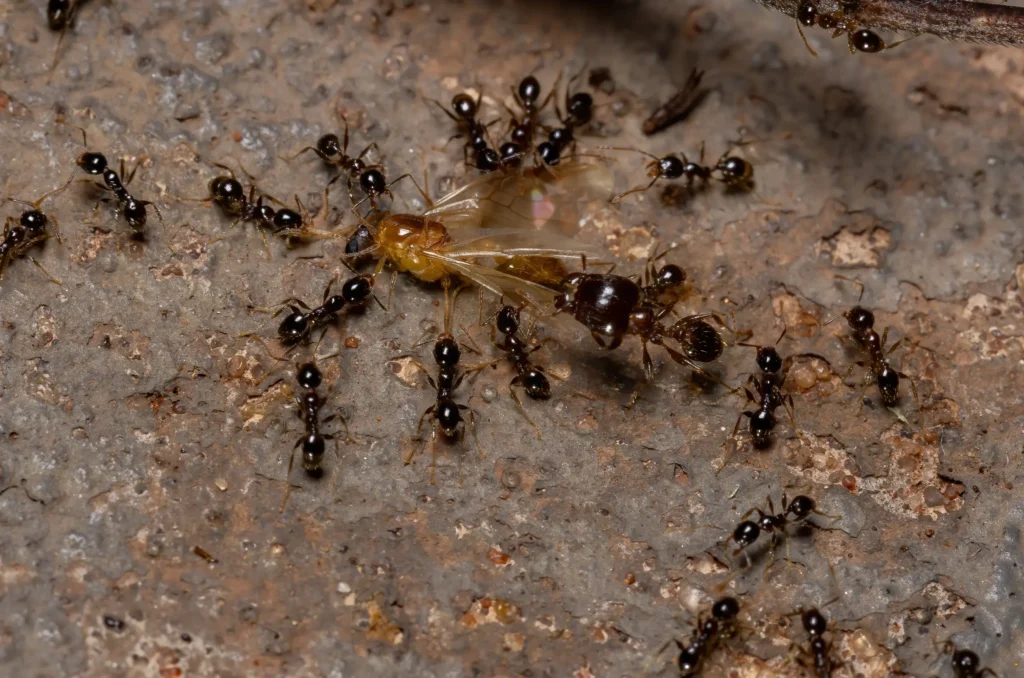
Big headed ants feasting on a flying insect

Signs of a Big Headed Ant InfestationBig headed ants colonies

Be on the lookout for the following warning signs:

  • Small mounds or piles of displaced soil near foundations, gardens, or even inside homes near baseboards.
  • Visible ant trails along walls, floors, or outdoor surfaces.
  • Discovery of multiple nests or entry points around the property.

If you notice these signs, early action is critical to prevent the colony from expanding further.

Why One Treatment Isn’t Enough

Because of big headed ants complex colony structure and rapid reproduction, they are notoriously difficult to eliminate with a single treatment. Some insecticides are ineffective against them such as over the counter products, and disturbing nests without proper control measures can cause the ants to scatter and rebuild elsewhere.

Effective management requires an integrated pest control approach that includes:

  • Professional assessment to locate all colonies and entry points.
  • Multiple treatment sessions using targeted baits and insecticides.
  • Ongoing monitoring to ensure the colony does not reestablish.
  • Preventive measures like keeping food sealed and reducing moisture.

Effective Control & Prevention Strategies

Hiring a professional pest control service is often the best way to tackle big headed ants effectively. Certified operators have the knowledge and tools to:

Big headed ants major and minor ants
  • Identify all the nests, including hidden outdoor colonies.
  • Apply EPA approved baits and solutions safely and correctly.
  • Provide advice on cleaning and home maintenance to reduce attractants.

At Infinite Pest Solutions, we specialize in comprehensive pest management plans designed to eliminate big headed ants and keep your home ant-free. Our experts follow industry best practices and tailor treatments to your specific situation.

For more tips on preventing pests in your home, check out our articles on Most Common Pest Control Questions and Types of Pests Found in Homes.

Conclusion

Big headed ants are a destructive invasive species capable of causing significant ecological and property damage. Their super, multi-queen colonies and adaptive behavior make them tough opponents for homeowners trying to eliminate them with a single treatment.

If you suspect a big headed ant infestation, act quickly and enlist Infinite Pest Solutions. Early intervention combined with a strategic treatment plan is the most effective way to protect your home and property from these persistent pests.

Our Southwest, FL Service Locations:

10 Facts About Ants

Ants are tiny, tireless, and surprisingly complex. They are some of the most common pests in Florida homes, but also some of the most fascinating. From their impeccable strength, to their persistence on supporting the colony, they are relentless tiny insects. How do you stop ants? Ant control which we also include in our pest control services.

Here Are the Ant Facts:

1. How is the Queen Ant Chosen? 

From the time they are born, queen ants receive special attention and nourishment when they are still in the egg. The more well-nourished eggs have a much higher chance of becoming queens.

The diet that the queen ant eats allows her to grow large in size and develop specialized reproductive organs. The queen’s primary job in the colony is to reproduce as the sole reproductive.

2. Red ants can be aggressive – here’s how to control red ants

There are many species of fire ants, but the most commonly known is the red imported fire ant. These ants are highly aggressive and they are known for their painful, burning sting which results in intense itching. The effects of a sting can last up to 10 days and may even lead to an infection. Some ant stings can cause an allergic reaction, and may become severe.

Due to their aggressive behavior and the fact that only about 20% of the colony is foraging at any given time, the most effective method to eliminate fire ants from an area is to have our experts apply individual mound treatments to help to control the activity. In addition, sealing any entry points that they are coming in from, like doors and windows is also helpful to prevent them from getting into structures.

3. What are the nearly invisible ants in my kitchen?

Ghost ants or sugar ants, get their name due to their tiny size and pale color, so this makes them especially difficult to see. They can be anywhere from 1.3 – 1.5 mm, making them some of the smallest ant species in the world!

With ghost ants, sanitation is critical in the prevention and control of ants. Any food debris left on the kitchen counters and sinks serve as an easy meal for ants. Ants are especially fond of sweet/sugary foods, one of their favorites being honeydew.

4. Killing the ants you see will never be enough

It’s never enough to eradicate the workers of the colony. The queen is the reason for active reproduction within the colony. This means the colony will never stop growing until the reproduction cycle is stopped entirely. Finding the queen is crucial but not easy.

5. Ants are one of the strongest animals in the world

Ants are some of the strongest animals in the world, relative to their size. Worker ants are able to carry items 10-50 times their body weight. They are so strong, they have been seen carrying lizards! 

6. Ants use communication with each other differently

Ants don’t have ears, so they rely on their other senses to communicate. Ants use their antenna similarly to how we use our noses. They pick up on chemical signals to let them know where to go and if danger is near. When a foraging ant discovers a food source, ants lay down a pheromone trail on its way back to the nest. This scent trail guides other ants directly to the food.

7. Fire Ants can float

When the red imported fire ant is faced with a flood, instead of drowning, the colony does something incredible. They band together to form a giant floating raft made entirely from their own bodies. 

The ants grip on tight to one another using their mandibles, and they hold on until they can get to higher ground. Because fire ants are aggressive and adaptable, they can stay in these rafts for weeks in order to protect the colony and the queen. 

8. One colony can contain thousands of ants

An ant colony can contain hundreds of thousands of ants, which are headed by a queen, or multiple queens. During her peak in reproduction, a queen ant can lay hundreds to thousands of eggs per day. In her lifetime, which is up to 30 years, a queen may lay millions of eggs. 

Smaller colonies can have anywhere from a few hundred to a few thousand ants while larger colonies can have anywhere from 100,000 to over 500,000 ants. There are even some supercolonies known to have millions of ants in a colony.

9. Heavy rain drives ants indoors

Because ants live in underground colonies, heavy rain can flood their nests and force them to seek higher, drier ground, which is often your home. In addition, rain can wash away their pheromone trails, which ants rely on to navigate. Without these chemical signals, they become disoriented and may wander into places they normally wouldn’t, like the inside of your house.

10. Regular Pest Control keeps ants away

Store bought pest control products are only designed to kill the ants that you see, the foragers, which account for just 10% or less of the whole colony. When the surface level ants are sprayed, the colony quickly rebounds with the queen and the majority of ants left untouched. 

Our professional pest control services covers many ant species through specialized baits and treatments that target the queen to eliminate the entire colony. Ongoing ant control is the best way to create a protective barrier around your home to repel these invaders.

Our Southwest, FL Service Locations:

How to Get Rid of Ants

Are you self treating the ants and they still keep coming back? No need to worry any longer, we are here to help! At Infinite Pest Solutions, we set ourselves apart from the rest by customizing the best pest plan for you. The first step on how to get rid of ants begins with identifying the type of ants at your home. Once determined, our experts will put together a constructive solution to eradicate the colonies!

The biggest misconception about ants is that the colony can be eliminated instantly. In order to provide long lasting results, it is necessary to have consistent treatments. Why you ask? Well, most of the time, ant colonies aren’t noticed until they become big enough to see that there is an issue. When this happens, it is likely you are dealing with thousands or even tens of thousands of ants. The queen of the colony or queens of multiple colonies are the source of reproduction. Ants will work tirelessly to ensure the queen stays fed and comfortable in order to keep reproduction going. Our objective is to stop that reproduction and in turn spread product throughout the colony like a disease.

When it comes to ants, we are the experts of Southwest Florida and the Orlando area! Tackling an ant infestation requires more than just a quick fix—it takes expertise, precision, and consistency. At Infinite Pest Solutions, we specialize in providing long-lasting, tailored solutions that target the root of the problem: the queen and the colony. With our ongoing treatments and deep understanding of ant behavior, we ensure your home stays protected and pest-free. Don’t let ants take over your space—reach out to us today and experience the difference that expert care can make!

Our Southwest, FL Service Locations:

Types of Pests Found in Homes

If you live in Florida, you are well aware of the year round pests that can make our outdoor living space feel like a war zone against bugs. But the last place you want to find a bug is inside your home. There are many different types of pests that can be found in a home, but are you able to identify them? The importance of identifying what type of pest could be in your home can help you eliminate the possibility of there being a larger issue at hand, an infestation. That is why we are here to help give you a quick guide to the unwanted guests you should have concerns about being in your home versus bugs that may have come inside by mistake.

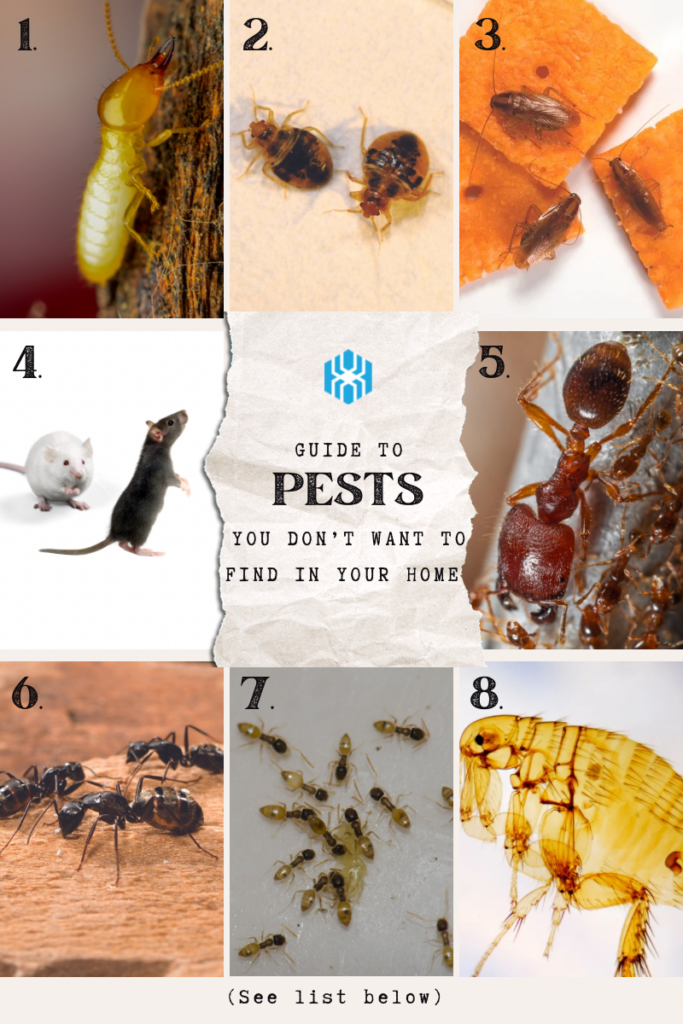
The most important type of pests to know are the kinds that wreak havoc in or on your interior living space – from eating away at the structure to an uninvited move-in. Here we will identify pests that you won’t want to find in your home, but if you do, you will want to take further action with Infinite Pest Solutions.

  1. Termites
  2. Bed Bugs
  3. German Roaches
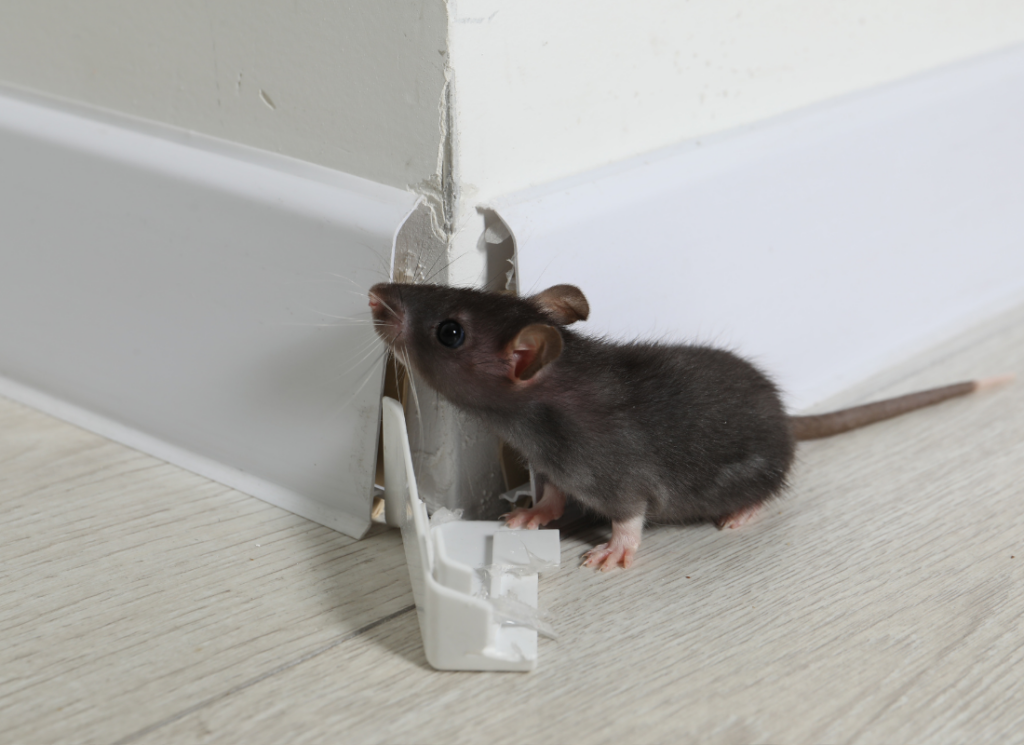
  4. RodentsMice and Rats
  5. Big Headed Ants
  6. Carpenter Ants
  7. Ghost Ants
  8. Fleas

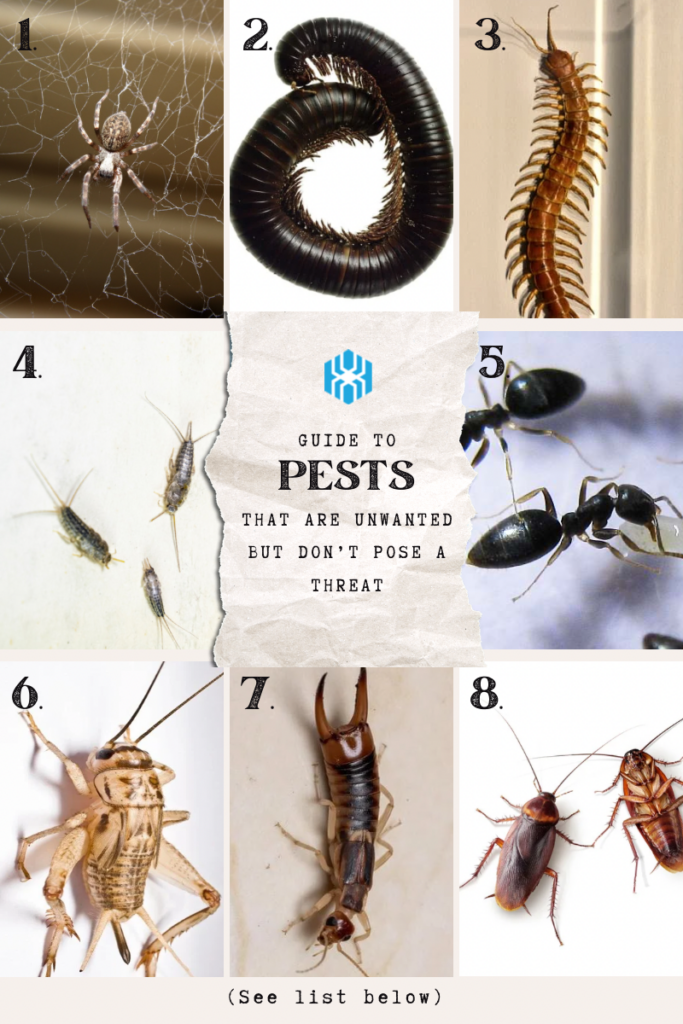
On the other hand, there are a number of common household pests in Florida that do not pose such a threat on your living space. Although these pests do not cause a threat to your environment, they can still be a nuisance and are typically unwanted. There can be a number of reasons why these critters have made their way into your Florida home – from a door or window being left open one second too long to cracks and crevices that have gone unnoticed.

  1. House Spiders
  2. Millipedes
  3. Centipedes
  4. Silverfish
  5. White footed ants
  6. House crickets
  7. Earwigs
  8. Palmetto Roach

With these guides, you can determine if you’re in need of immediate solutions or can rest easy knowing a critter entered by mistake. If you still find yourself unsure, that is why we are here for you! An Infinite expert can be at your door within the same day or next for a thorough inspection and a customized pest control plan to get rid of the pests. What bugs you, bugs us!

Our Southwest, FL Service Locations: