

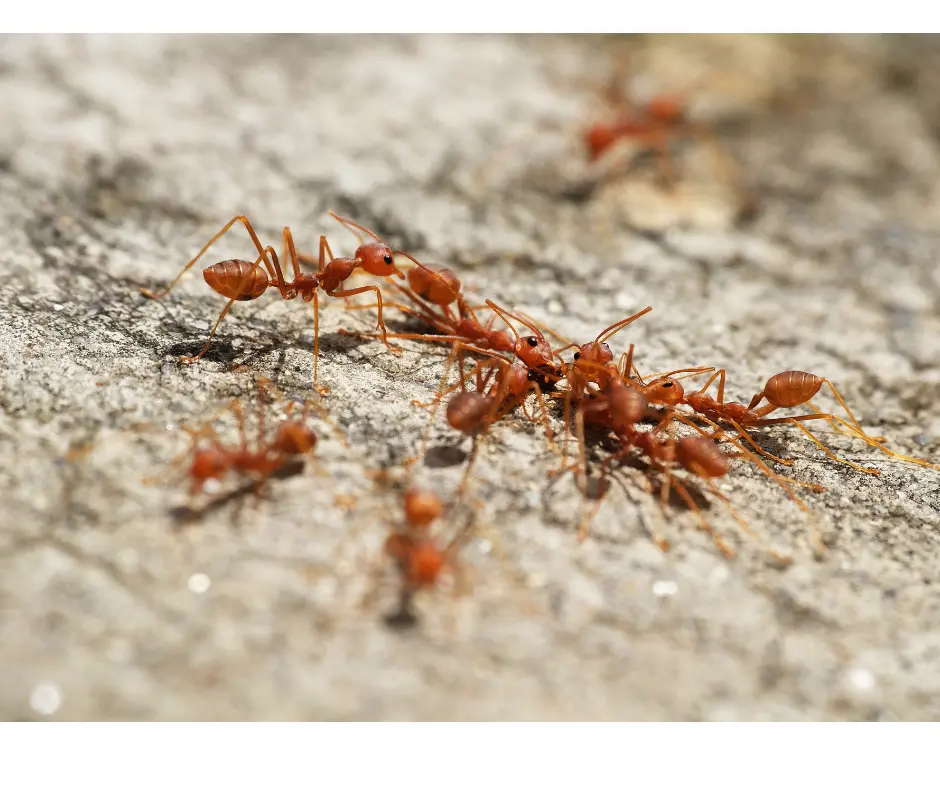
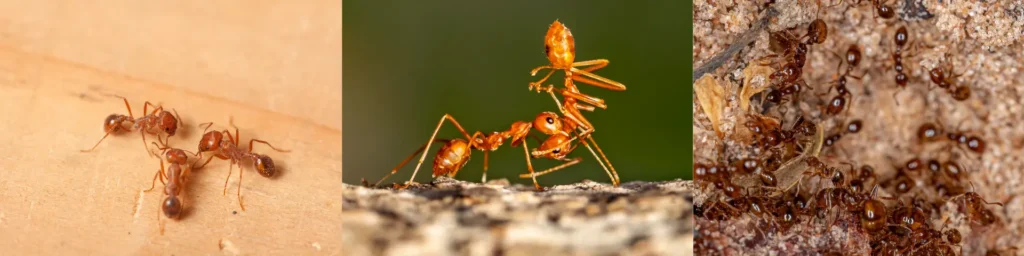
Fire ants are a rapidly spreading invasive species. Each year in the United States, these pests cause millions of painful stings. Furthermore, the Centers for Disease Control and Prevention (CDC) reports that fire ant stings send thousands of people to emergency rooms due to severe allergic reactions and infections.
Understanding fire ant behavior is the first step in protecting your home, family, and pets. Consequently, knowing how to spot them and how to fight back can save you a lot of pain.
What Are Fire Ants?
Fire ants are small, reddish-brown to black insects known for their aggressive nature. They get their name from the intense, burning sensation their stings leave behind. Typically, these ants measure about 1/8 inch long.
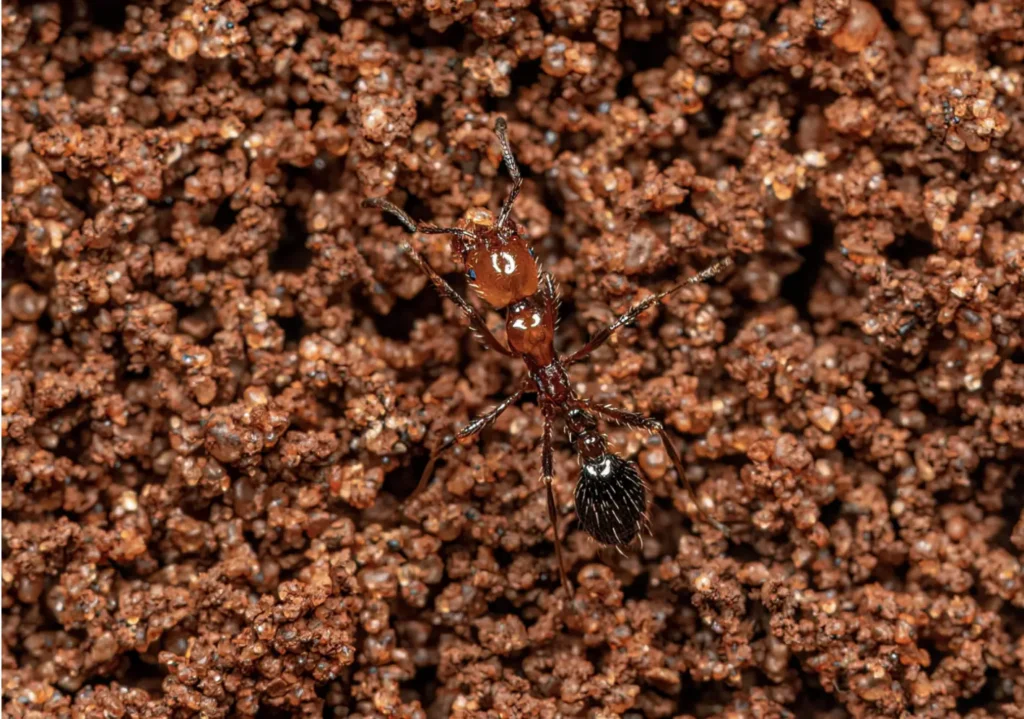
Big headed ants are commonly mistaken for fire ants. The biggest difference in these two species of ants is that big headed ants have major workers with much larger heads.
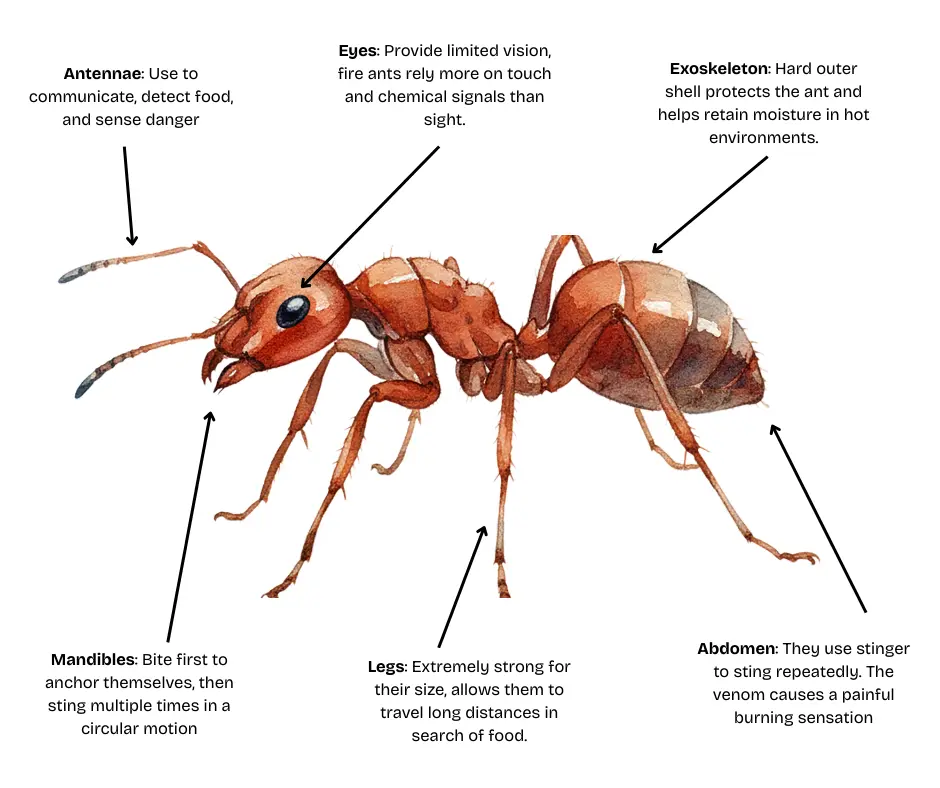
Unlike many other ant species that only bite, fire ants use a “grip and sting” tactic. Additionally, they bite to anchor themselves to their target and then sting repeatedly with the venomous stinger at the tip of their abdomen. This process then injects venom that causes sharp pain and often results in itchy, pus-filled blisters.
Fire Ant Behavior and Habitat
Fire ants build complex colonies run by one or more queens. You can usually identify their presence by their nests, which look like rounded, “fluffy” mounds of loose soil. These mounds can range from a few inches to several feet wide.
Where do they live?
- Sunny spots: They prefer open areas like lawns, parks, and pastures.
- Hidden areas: They may nest under pavement or inside electrical boxes.
- Indoor intrusion: If food is sensed through cracks/crevices, they will intrude.

While they are from South America, fire ants arrived in the U.S. in the early 20th century. This explains the other name “red imported fire ants”. Since then, they have marched across the South and West, from Florida to California. They become most active during warm months and often surface after heavy rain to keep their larvae from drowning.
In one instance of our pest career, we were called out to a home by a customer whose newborn was being attacked by fire ants in their crib. Due to unsealed crevices by the child’s window and remaining on the child, fire ants found their way to the crib. Following this incident we were contacted to inspect and come up with a plan to prevent this again. As a result of the inspection and pest control plan, we were able to ensure this never happened again.
Risks: More Than Just a Sting
Fire ant stings are notoriously painful, but the risks go deeper than skin level. For sensitive individuals, a sting can trigger life-threatening allergic reactions. Additionally, pets—especially curious dogs—can suffer from rashes or serious complications if they stumble into a mound.
Because the stings itch intensely, many people scratch them, which leads to secondary bacterial infections like staph. Therefore, it is vital to keep an eye on any stings for signs of spreading redness or fever.
What Do Fire Ants Eat?
Fire ants are not picky eaters; they will consume almost anything. Outdoors, they act as predators, feeding on:
- Fleas and ticks
- Spiders
- Cockroaches
However, if they find their way indoors, they shift their focus to your pantry. They seek out sweets, fats, and proteins, often invading kitchens in search of even the smallest crumbs.
How to Spot an Infestation
To find fire ants on your property, look for dome-shaped mounds with loose soil and no obvious center entrance hole. If you see individual ants inside near food sources, it likely means a colony is thriving just outside. Because fire ants can squeeze through tiny cracks, even a few ants indoors warrant an Infinite inspection.
Effective Fire Ant Control Methods
To truly eliminate a fire ant problem, you must kill the queen. If the queen survives, the colony will simply regenerate. While many “DIY” home remedies exist, they just cause the colony to move to a different part of your yard.
Professional pest control is the most reliable solution. Infinite uses a multi-step approach:
- Prevention: Regular maintenance prevents new colonies from moving in from the neighbor’s yard or grow in yours.
- Detailed Inspection: Our licensed technicians inspect the inside and outside of the home to come up with the best game plan.
- Targeted Baits: We use treatments that worker ants carry back to the queen.
- Growth Regulators: These stop the ants from reproducing.
Fire ants are aggressive, but you don’t have to surrender your yard to them. Recognizing the signs of an infestation is your first line of defense. At Infinite Pest Solutions we specialize in safeguarding your family and pets from these hazardous pests.
Don’t let fire ants take over your outdoor space. Reach out to us today so you can get back to enjoying your yard in peace!