

Understanding the Differences and How to Protect Your Home
Hornets and wasps are frequently confused—both are flying, stinging insects that can be a nuisance around homes, especially during Florida’s warm, humid seasons. However, telling them apart is more than just trivia—it’s essential for choosing the right prevention and protection strategy for your family and home.
Are Hornets and Wasps the Same?
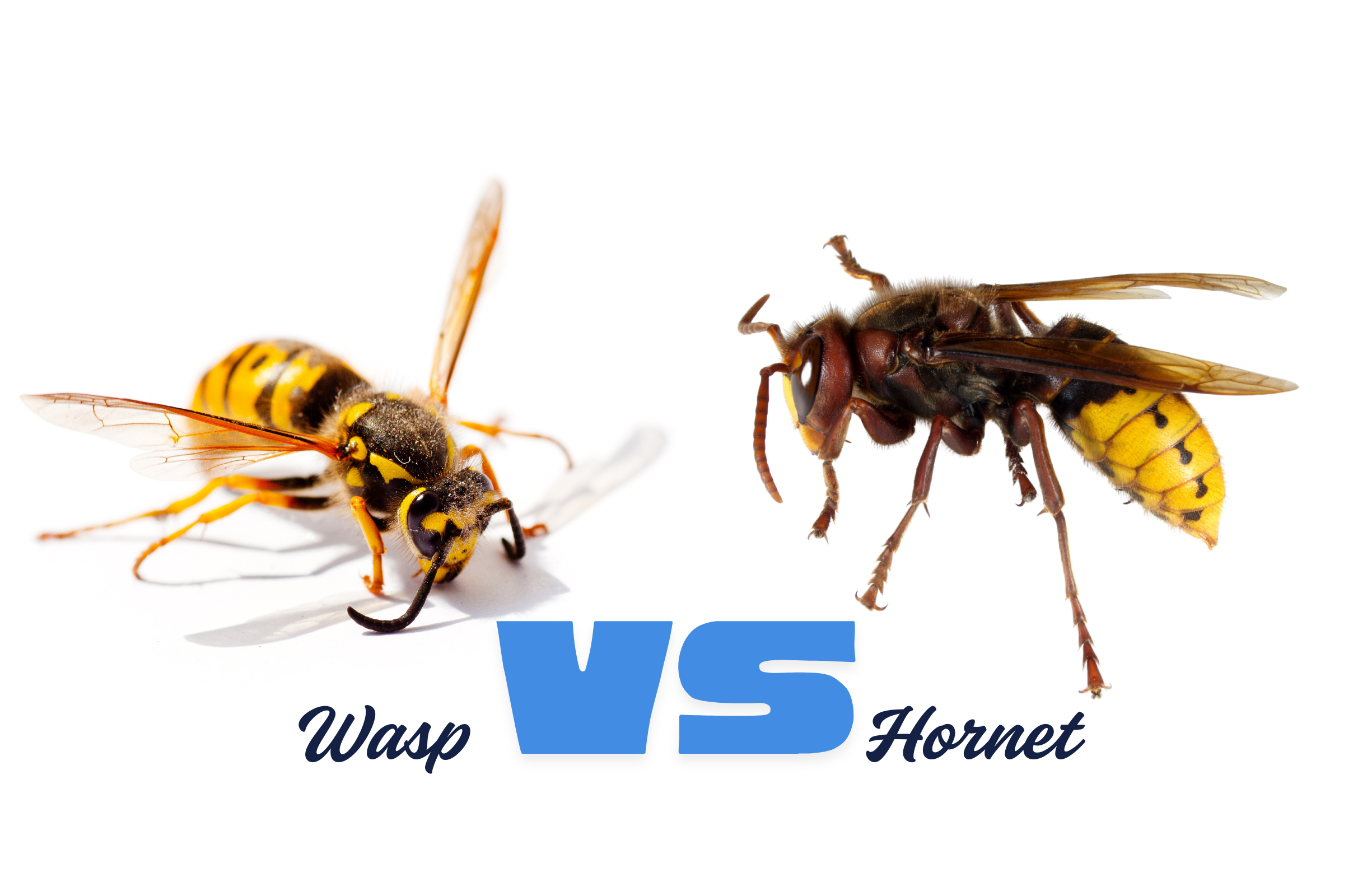
Not exactly. All hornets are wasps, but not all wasps are hornets. “Wasp” is a broad category that includes species like paper wasps, yellowjackets, and mud daubers. Hornets are a specific type of wasp, with the European hornet being the most recognized species in parts of the southeastern U.S., including Florida.
Identifying Wasps and Hornets
Wasps
- Slender, narrow “waist” between thorax and abdomen
- Typically a black and yellow color
- Have a narrow “waist” between the thorax and abdomen, which gives them an elongated shape.
- Common in Florida: Paper wasps, mud daubers, and yellowjackets
Hornets
- Larger than wasps, measuring 1–2 inch in length
- Black and white or black and brown, sometimes with yellow (varies by species)
- Have a more rounded abdomen
In Florida, you’re more likely to see paper wasps and yellowjackets than hornets, but hornets can still appear—especially the European hornet, which has been growing in presence in parts of the Southeast.
Behavior Differences
Wasps are highly defensive and will sting when their nest is approached—even if you’re not directly threatening them. In late summer, they’re especially aggressive due to dwindling food sources.
Hornets, on the other hand, are typically more reserved. However, if their nest is disturbed, they become extremely dangerous. They can release pheromones that trigger group attacks—meaning multiple stings in a matter of seconds.
Nesting & Colony Behavior
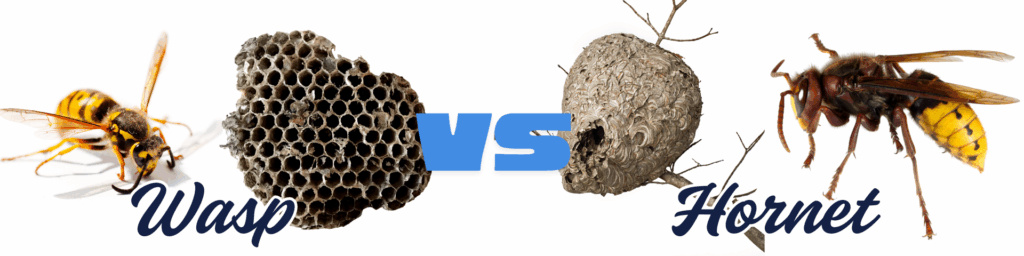
Wasps prefer to build open or underground nests near human structures, like eaves, soffits, garages, and bushes. Their colonies are smaller than hornet colonies but can be widespread. The presence of a visible nest or active wasps nearby is usually the first sign of an infestation. Wasps often build nests that are umbrella-shaped with visible hexagonal cells which are usually attached to eaves or branches. The nests are made out of a papery substance with a grayish layered appearance. Florida’s humidity encourages quick nest growth, and many homeowners notice sudden increases after heavy rain.
Hornets build large, enclosed nests that are often tucked away in trees, attics, porches, or under eaves. Their colonies can contain hundreds of hornets, but encounters with humans are less frequent because the nests are hidden. Observing hornets entering or leaving a nest is the most common indication of an infestation. Hornets often build spherical or oval-shaped nests that are gray or brown in color with a smooth, papery exterior.
What to Expect With Stinging
Wasp stings are sharp and cause immediate pain, redness, swelling, and itching. Although generally less intense than hornet stings, they can still be painful and trigger allergic reactions in sensitive individuals. Wasps can sting multiple times without dying.
Hornet stings are particularly painful because their venom is stronger, causing burning, swelling, redness, and heat around the sting site. The sting often leaves a noticeable welt and significant inflammation, and allergic reactions are possible. Like wasps, hornets can sting multiple times without dying.
What Are Mud Daubers?
Mud daubers are a commonly seen wasp in Florida. While they are far less aggressive than wasps or hornets and rarely sting, they create a different kind of issue. These wasps build mud tube nests on walls, doors, ceilings, and soffits. Once the mud nest hardens, it can stain in the paint on your home and leave permanent marks. If the nests are removed improperly, they can also cause paint chipping or discoloration. Even though mud daubers aren’t typically dangerous, homeowners should still have their nests professionally removed to protect their home’s exterior.
Professional Removal and Prevention
Removing wasp and hornet nests on your own, can be dangerous. Wasps are aggressive and territorial, and hornets have stronger venom and larger colonies, making DIY removal extremely risky. The safest and most effective way to protect your home is through professional pest control.
At Infinite Pest Solutions, our trained licensed technicians can safely locate nests, remove active colonies, and apply targeted treatments to prevent these insects from returning. Regular pest control not only eliminates existing nests but also creates a protective barrier around your home to reduce the risk of future infestations.
Our Orlando Service Locations:
- Orlando
- Clermont
- Apopka
- Windermere
- St. Cloud
- Winter Garden
- Lake Buena Vista
- Kissimmee
- Sanford
- Davenport
- Oakland
- Minneola
- Lake Nona
- Ocoee
- Longwood
- Lake Mary
- Oviedo
- Winter Park
- Altamonte Springs
Our Southwest, FL Service Locations:
- Fort Myers
- Cape Coral
- Naples
- Babcock Ranch
- Lehigh Acres
- Ave Maria
- Estero
- Bonita Springs
- Marco Island
- Sanibel Island