
Black Widow
Black Widows in Central and South Florida
| Feature | Details |
| Scientific Name | Latrodectus mactans (Southern Black Widow) |
| Size | Females: 1.5 inches (legs extended) |
| Other Names | Hourglass spider, Shoe-button spider |
Key Identification
Florida is home to several widow species, but the Southern Black Widow is the most iconic.
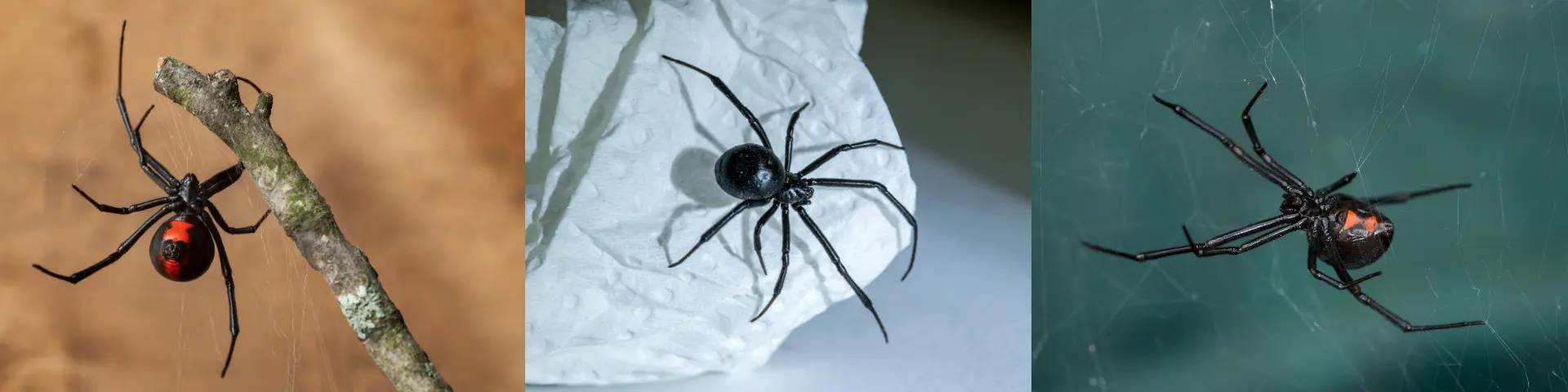
- The “Hourglass”: The most famous mark is the bright red or orange hourglass shape on the underside of the shiny black abdomen.
- The Web: Unlike the beautiful, geometric webs of garden spiders, Black Widow webs are messy, irregular, and tangled. The silk is remarkably strong and makes a “crackle” sound when torn.
- The Body: Females are jet-black and bulbous. Males and juveniles are smaller, browner, and often have white or red spots on their backs.
- Location: In Florida, they love dark, undisturbed spots: garages, water meter boxes, woodpiles, and underneath patio furniture.
About Black Widow Spiders
While their reputation is fearsome, Black Widows are generally shy and reclusive. They are not aggressive and usually only bite when they are accidentally squeezed or when a female is guarding her egg sac.
In Florida, they are active year-round due to the warm climate. They are beneficial predators that eat cockroaches, crickets, and beetles, but their potent neurotoxic venom makes them a significant safety risk when they nest near areas where children or pets play. When they pose a risk on you and your families safety, having Spider Control is important.
How to Treat
Because of the medical risk associated with their venom, DIY treatment for Black Widows is not recommended for infestations.
- De-webbing: Use a long-handled brush to remove webs and egg sacs. This is a tedious job that can be left to Infinite!
- Exterior Power Solutions: A professional perimeter treatment around the foundation, eaves, and “harborage” sites (like pool pumps, pool cages) creates a barrier that kills spiders and their food sources.
- Mechanical Exclusion: In Florida’s humidity, weather stripping often fails. Replace worn seals on garage doors and windows to keep spiders from wandering inside.
- Lighting Adjustments: Switch outdoor bulbs to yellow “bug lights.” This attracts fewer insects (the spider’s food), making your home a less attractive hunting ground.
Frequently Asked Questions on Black Widows in Florida
How dangerous is a Black Widow bite?
A Black Widow’s venom is a neurotoxin. While rarely fatal to healthy adults, a bite can cause severe muscle pain, abdominal cramps, and tremors. If you suspect a bite, seek medical attention immediately, especially for children, the elderly, or pets.
Are there “False Black Widows” in Florida?
Yes. The Brown Widow (Latrodectus geometricus) is very common in Florida. They are tan/brown with orange hourglasses and distinctive “spiky” egg sacs. While their venom is also toxic, they are generally less dangerous than the Southern Black Widow.
Can a pest control service get rid of spiders permanently on the outside of my house?
While no service can stop a spider from ever crawling onto your property, regular maintenance keeps the “prey” population (roaches/crickets) low, which naturally discourages spiders from nesting at your home.
Our Orlando Service Locations:
- Orlando
- Clermont
- Apopka
- Windermere
- St. Cloud
- Winter Garden
- Lake Buena Vista
- Kissimmee
- Sanford
- Davenport
- Oakland
- Minneola
- Lake Nona
- Ocoee
- Longwood
- Lake Mary
- Oviedo
- Winter Park
- Altamonte Springs
Our Southwest, FL Service Locations:
- Fort Myers
- Cape Coral
- Naples
- Babcock Ranch
- Lehigh Acres
- Ave Maria
- Estero
- Bonita Springs
- Marco Island
- Sanibel Island