
Brown Widows
Brown Widow Spider Profile
| Feature | Details |
| Scientific Name | Latrodectus geometricus |
| Size | Females: 1 to 1.5 inches (legs extended) |
| Other Names | Geometric Button Spider, Grey Widow |
Key Identification
Brown Widows are often misidentified, but they have several unique features that distinguish them from their black-colored cousins, the black widow.
- The Hourglass: Unlike the bright red hourglass of the Black Widow, the Brown Widow’s hourglass is typically a vivid orange or yellowish-orange.
- The Egg Sac: This is the easiest way to identify them. Their egg sacs are “spiky” or tufted, looking like a tiny naval mine or a sandspur. (Black Widow sacs are smooth).
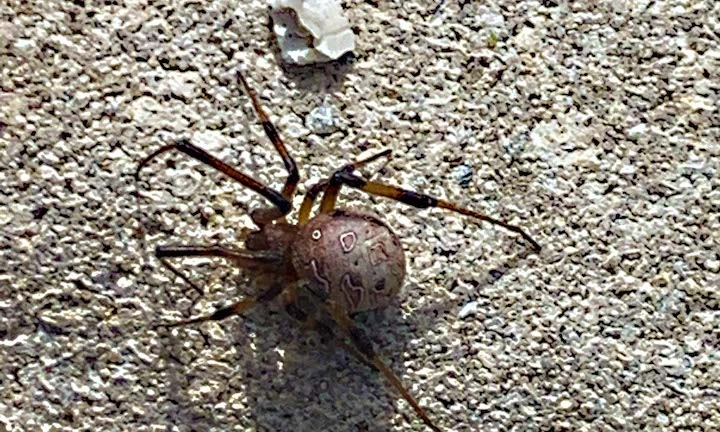
- Body Color: They are usually a mottled tan, grey, or brown with black and white geometric patterns on the sides of the abdomen.
- Leg Stripes: They often have dark “bands” or stripes on their legs, particularly at the joints.
About Brown Widow Spiders
The Brown Widow is an invasive species in Florida that has successfully pushed into urban areas. They are extremely prolific breeders; while a Black Widow might lay one egg sac, a Brown Widow can produce several in a single season.
They are synanthropic, meaning they live almost exclusively around human structures. In Florida, you’ll find them tucked into the “lips” of plastic flower pots, under the railings of decks, or in your front doorway. They are shy and prefer to “drop” from their web and play dead rather than bite.
How to Treat
Because Brown Widows hide in very specific, tight crevices, a general “spray and pray” approach often misses them.
- Targeted Inspection: Focus on “voids.” Check the underside of patio furniture, the interiors of outdoor toys, soffits, and the corners of garage door tracks.
- Egg Sac Removal: This is crucial. Because they breed so quickly, you must physically remove and destroy the spiky egg to break the life cycle. In this instance, its pest to call the professionals.
- Residual Treatments: Professional treatment to the specific cracks and crevices where they harbor will be the best solution. In Florida’s heat, these products need to be UV-stable to remain effective – unlike a lot of over the counter products.
- Clutter Reduction: Brown Widows thrive in cluttered areas. Moving woodpiles away from the house and keeping garages organized removes their preferred nesting sites.
Frequently Asked Questions on Brown Widows in Florida
Is a Brown Widow bite as dangerous as a Black Widow bite?
While the Brown Widow’s venom is technically more potent drop-for-drop, they inject much less of it when they bite. A bite is painful and may cause redness and swelling, but it is generally considered less medically significant than a Black Widow bite.
Why do I see so many spiky balls in my garage?
Those spiky, cream-colored balls are Brown Widow egg sacs. Each one can contain up to 150 spiderlings. Seeing these is a guaranteed sign of an active infestation that requires treatment.
Why are Brown Widows so common in Florida?
Florida’s humidity and warmth are perfect for this species. They have no natural “winter” to kill them off, and they have successfully out-competed many native spiders for space around homes and businesses.
Our Orlando Service Locations:
- Orlando
- Clermont
- Apopka
- Windermere
- St. Cloud
- Winter Garden
- Lake Buena Vista
- Kissimmee
- Sanford
- Davenport
- Oakland
- Minneola
- Lake Nona
- Ocoee
- Longwood
- Lake Mary
- Oviedo
- Winter Park
- Altamonte Springs
Our Southwest, FL Service Locations:
- Fort Myers
- Cape Coral
- Naples
- Babcock Ranch
- Lehigh Acres
- Ave Maria
- Estero
- Bonita Springs
- Marco Island
- Sanibel Island