
Moles
Mole Profile
| Feature | Details |
| Common Species | Eastern Mole (Scalopus aquaticus) |
| Size | 5 to 7 inches long |
| Diet | Earthworms, grubs, and soil-dwelling larvae |
Key Identification
Since moles spend 99% of their lives underground, you identify them by their “work” rather than their appearance.
- Surface Ridges: These are the most common signs. Moles push up the sod as they “worm” through the top layer of soil, creating long, raised ridges that feel spongy when stepped on.
- Mole Hills: Unlike the conical, “volcano” shaped hills of gophers, mole hills are typically symmetrical and mound-like, with the exit hole usually plugged with soil.
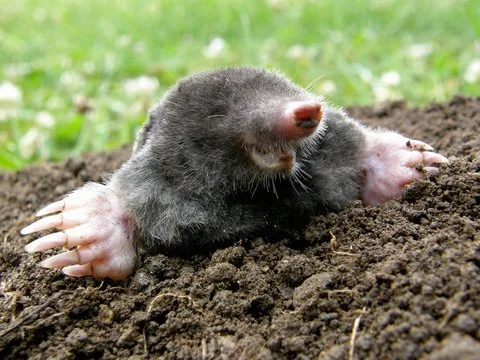
- Appearance: If you do see one, they have velvety grey fur, tiny “blind” eyes, no visible ears, and massive, spade-like front paws designed for “swimming” through Florida’s sandy soil.
- The “Lawn Trap”: Mole tunnels can cause the grass above to turn brown and die because the air pockets created by the tunnel dry out the root system.
About Moles in Florida
Moles are not rodents; they are insectivores. They aren’t in your yard to eat your tulip bulbs or your St. Augustine grass—they are there for the buffet of earthworms and grubs living in your soil.
In Florida, moles are active year-round. Because our soil is so sandy and easy to navigate, a single mole can tunnel up to 100 feet in one day. They have an incredibly high metabolism and must eat nearly their body weight in insects every day to survive, which keeps them constantly on the move.
How to Treat
To get rid of moles, you have to address both the animal and the reason the animal chose your yard.
- Trapping (The Most Effective): We use professional-grade traps placed inside active travel tunnels. This is the only way to guarantee the removal of the specific mole causing the damage.
- Baiting: We use specialized granular bait that is designed to repel the mole from enjoying it’s buffet under your lawn.
Frequently Asked Questions About Moles
Are moles eating my garden vegetables?
No. Moles are strictly carnivores. If your plants are being eaten from below, you likely have Voles or Pocket Gophers. Moles only cause damage by disrupting the root systems as they dig.
Why do I have more moles after it rains?
Florida rains drive earthworms and insects toward the surface of the soil. Moles follow their food, meaning you’ll see many more “surface ridges” appearing after a typical Florida afternoon thunderstorm.
Can I just flood their tunnels with a garden hose?
This is rarely effective in Florida’s sandy soil. The water drains away too quickly, and moles have specialized lungs that allow them to survive in high-CO2 environments. It usually just results in a higher water bill and a muddier lawn.
Our Orlando Service Locations:
- Orlando
- Clermont
- Apopka
- Windermere
- St. Cloud
- Winter Garden
- Lake Buena Vista
- Kissimmee
- Sanford
- Davenport
- Oakland
- Minneola
- Lake Nona
- Ocoee
- Longwood
- Lake Mary
- Oviedo
- Winter Park
- Altamonte Springs
Our Southwest, FL Service Locations:
- Fort Myers
- Cape Coral
- Naples
- Babcock Ranch
- Lehigh Acres
- Ave Maria
- Estero
- Bonita Springs
- Marco Island
- Sanibel Island