

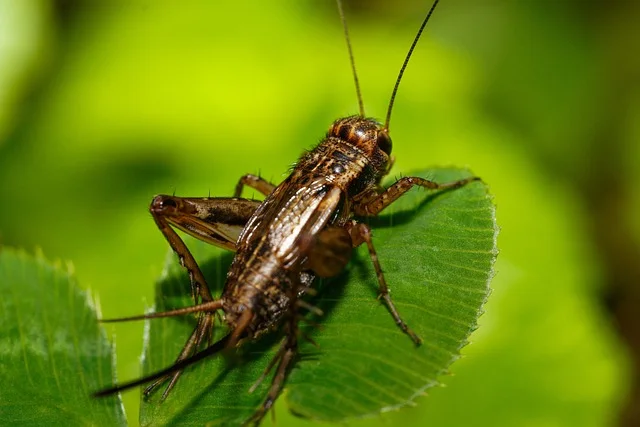
Crickets
Cricket Profile
| Feature | Details |
| Scientific Name | Gryllus spp. (Field Cricket) & Acheta domesticus (House Cricket) |
| Size | 15mm to 25mm (approx. 1 inch) |
| Other Names | Field cricket, House cricket, Tropical house cricket |
Key Identification
Florida is home to several species, including the Tropical House Cricket, which thrives in the state’s humidity.
- The Sound: The most obvious sign is the “chirping” (stridulation) created by males rubbing their wings together to attract females.
- Appearance: They are typically black or brown with long antennae and powerful hind legs designed for jumping.
- The Jump: Unlike roaches that scurry, crickets will jump erratically when startled, which often frightens homeowners.
- Nocturnal Habits: They are highly attracted to bright outdoor lights and are most active from dusk until dawn.
About Crickets in Florida
Crickets are scavengers. While they usually live outdoors in mulch, tall grass, or under debris, Florida’s heavy rains or extreme heat can drive them inside. Once indoors, they aren’t just loud; they can be destructive.
They have chewing mouthparts and are known to eat through fabric, including silk, wool, and synthetics. If you notice small, irregular holes in your curtains or clothing, you might have a cricket “fabric pest” issue.
How to Treat
Cricket control is all about “Defense and Diet.” We stop them from getting in and remove the conditions that allow them to thrive.
- Light Management: Since crickets are drawn to light, we recommend switching to yellow “bug bulbs” or motion-sensor lighting on porches to stop them from gathering at your front door.
- Perimeter Granules: We apply weather-resistant bait granules to mulch beds and gardens. Crickets are foragers and will consume the bait before they ever reach your foundation.
- Moisture Control: Crickets love damp, dark places. In Florida, this means keeping pine straw and mulch at least 6–12 inches away from the home’s siding and ensuring crawl spaces are dry.
- Mechanical Exclusion: If a cricket can get its head through a gap, its whole body will follow.
Frequently Ask Questions About Crickets in Florida
Why is there a cricket chirping in my wall?
Crickets often enter wall voids through exterior gaps like weep holes or utility penetrations. Because walls provide safety and warmth, they stay there and chirp, which can be incredibly frustrating for homeowners trying to sleep.
Do crickets cause damage to homes?
Yes. While they don’t do structural damage like termites, they are “fabric pests.” They are attracted to soiled clothing (sweat or food stains) and will chew through the material, leaving permanent damage to rugs, clothes, and upholstery.
Are crickets a sign of other pests?
Often, yes. Crickets are a primary food source for spiders, scorpions, and centipedes. A high cricket population around your Florida home is like an “all-you-can-eat” sign for more dangerous predators.
Our Orlando Service Locations:
- Orlando
- Clermont
- Apopka
- Windermere
- St. Cloud
- Winter Garden
- Lake Buena Vista
- Kissimmee
- Sanford
- Davenport
- Oakland
- Minneola
- Lake Nona
- Ocoee
- Longwood
- Lake Mary
- Oviedo
- Winter Park
- Altamonte Springs
Our Southwest, FL Service Locations:
- Fort Myers
- Cape Coral
- Naples
- Babcock Ranch
- Lehigh Acres
- Ave Maria
- Estero
- Bonita Springs
- Marco Island
- Sanibel Island