
Carpenter Ants
Carpenter Ant Profile
| Feature | Details |
| Scientific Name | Camponotus spp. (Florida Carpenter Ant) |
| Size | Large: 6mm to 20mm (up to 1 inch) |
| Other Names | Bull ant, Wood ant |
Key Identification
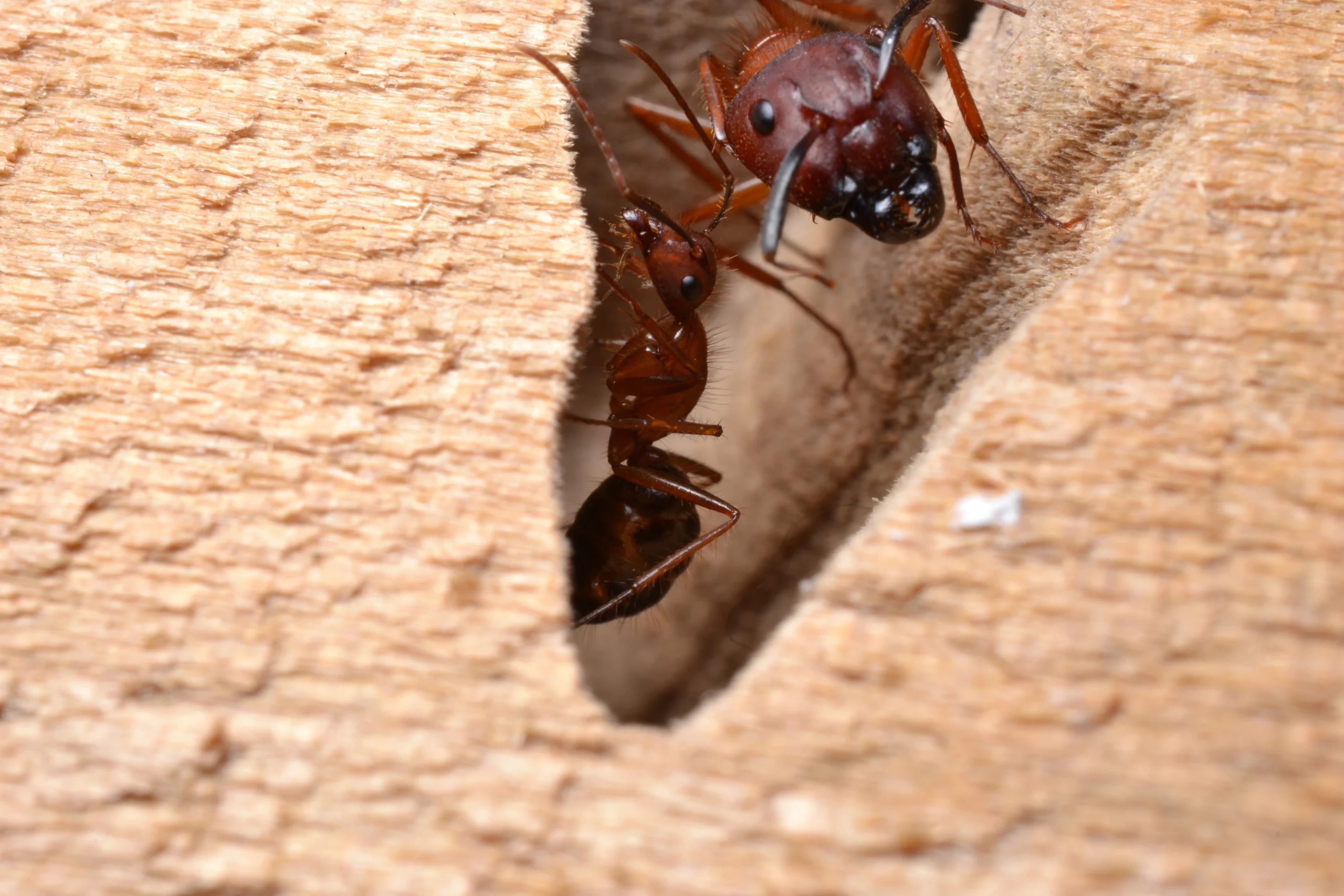
Florida is home to several species, notably the Florida Carpenter Ant, which typically has a reddish-orange thorax and a black abdomen.
- The “Frass”: Unlike termites that eat wood, carpenter ants only excavate it. Look for “frass”—small piles of sawdust-like wood shavings, often mixed with insect parts, pushed out of their nesting holes.
- Smooth Galleries: If you see damaged wood, carpenter ant tunnels look sanded and clean. Termite tunnels are usually caked with mud.
- Size & Shape: They are among the largest ants in Florida. They have a distinct, evenly rounded thorax (the middle section) when viewed from the side.
- Nocturnal Activity: They are most active at night. If you see large ants wandering around your kitchen or porch at 10:00 PM, they are almost certainly carpenter ants.
About Carpenter Ants
Carpenter ants are a “structural” pest. They don’t eat wood for nutrition; they hollow it out to create galleries for their nests. In Florida’s humid climate, they are particularly drawn to moisture-damaged wood. They will also fight off a termite colony and take over the already excavated wood that the termites started.
A unique challenge in Florida is their “satellite colony” system. The main nest (with the queen) is often outside in a rotting tree or stump, while “satellite” nests (containing workers and older larvae) are established inside your home’s walls, attic, or foam insulation.
How to Treat
Treating carpenter ants requires more than just a surface spray; you have to eliminate the parent colony. Ongoing General Pest Control is your best solution to making sure the infestation gets taken care of and stays away.
- Moisture Remediation: This is step one. Fix leaky roofs, sweating pipes, and clogged gutters. If the wood is dry, carpenter ants are much less likely to stay.
- Parent Nest Location: Track their trails at night to find the “parent” colony outside. Eliminating the outdoor source is the only way to stop the indoor satellite nests.
- Baiting: Professional grade baits are needed for Carpenter ants. Use of gel baits inside where the ants are entering the home, and a combination of gel and granular baits outside, along trails and at the nesting sites.
- Tree Trimming: In Florida, trees are “ant bridges.” Ensure no branches touch your roof or siding, as this provides a direct path for ants to bypass your foundation’s product barrier.
Frequently Asked Questions About Carpenter Ants in Florida
Are carpenter ants the same as termites?
No. Termites actually eat the wood (cellulose), whereas carpenter ants simply carve it out to live in. While both can cause structural damage, carpenter ants work much slower. However, if you see “sawdust” (frass), it is a sign of an active carpenter ant nest.
Why do I see large winged ants in my house?
These are “swarmers” (reproductive ants). If you see them inside, it usually means there is a mature nest already established within the structure. In Florida, this typically happens in the spring and early summer.
Can carpenter ants bite?
Yes. Because of their large size, they have powerful mandibles and can deliver a painful nip if handled. They do not have a stinger, but they can spray formic acid into the bite wound, which causes a burning sensation.
If I am selling my house, are Carpenter ants part of a Wood Destroying Organism report?
No. It is, however, still recommended to get them treated if you have signs of them. Ongoing Pest Control is the best option.
Our Orlando Service Locations:
- Orlando
- Clermont
- Apopka
- Windermere
- St. Cloud
- Winter Garden
- Lake Buena Vista
- Kissimmee
- Sanford
- Davenport
- Oakland
- Minneola
- Lake Nona
- Ocoee
- Longwood
- Lake Mary
- Oviedo
- Winter Park
- Altamonte Springs
Our Southwest, FL Service Locations:
- Fort Myers
- Cape Coral
- Naples
- Babcock Ranch
- Lehigh Acres
- Ave Maria
- Estero
- Bonita Springs
- Marco Island
- Sanibel Island