

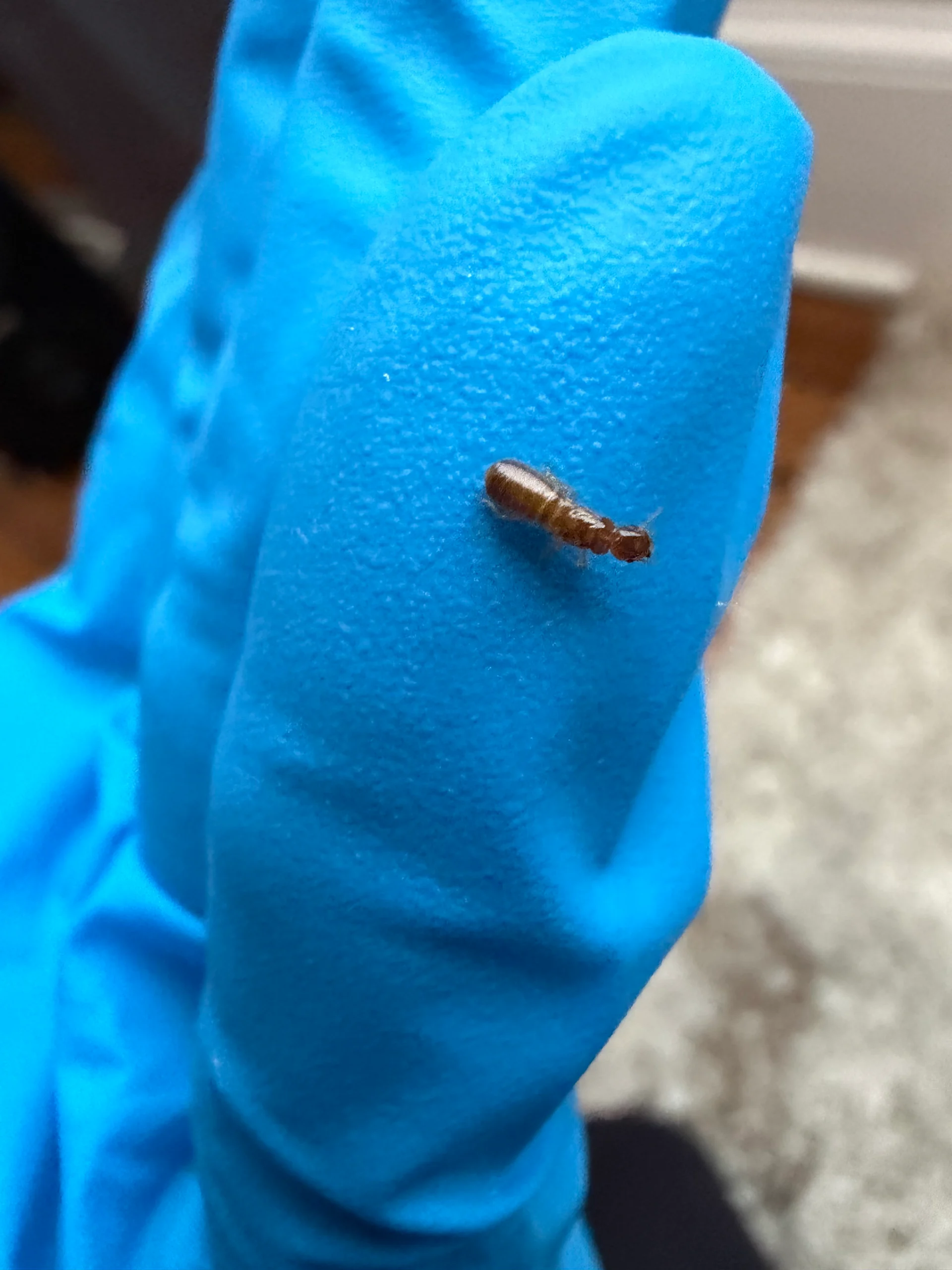
Drywood Termites
Drywood Termite Profile
| Feature | Details |
| Scientific Name | Cryptotermes spp. & Incisitermes spp. |
| Size | 10mm to 12mm (swarmers) |
| Other Names | Furniture termites, “Powderpost” termites (often confused) |
Key Identification
Drywood termites live entirely inside the wood they consume. Because they are hidden, you have to look for very specific biological “clues.”
- The Pellets (Frass): This is the #1 sign. They push their excrement out of tiny “kick-out holes.” These pellets (frass) are hard, six-sided, and look like piles of sand or coffee grounds.
- The Swarmers: In Florida, they typically swarm at night during late spring and summer. You may find discarded wings on windowsills or near light fixtures.
- Surface Blistering: As they eat close to the surface, the wood may look “blistered” or feel paper-thin when tapped with a screwdriver.
- No Mud Tubes: If you see mud tubes on the foundation, you likely have Subterranean termites. Drywood termites do not build mud tubes.
About Drywood Termites in Florida
Florida’s climate is a paradise for Drywood termites. Because they extract all the moisture they need from the humidity in the air and the wood itself, they can nest anywhere: in your attic rafters, your window frames, or even your hardwood furniture.
Unlike other species that require thousands of members to cause damage, a Drywood colony is smaller but highly efficient. They can remain undetected for years because they don’t need to return to the ground, making them “stealth” destroyers of Florida homes. Also known as the “silent destroyers”.
How to Treat
Drywood termite treatment depends entirely on the extent of the infestation. One size does not fit all.
- Whole-Home Fumigation (Tenting): This is the “gold standard” for major infestations. The home is covered in a tent and a gas is introduced, which penetrates deep into the heart of every wooden beam to ensure 100% elimination.
- Localized Spot Treatment: If the infestation is caught very early and is limited to a single piece of furniture or one door frame, we can use specialized foam, dust, or liquid injections directly into the termite galleries.
- Preventative Coatings: These can include a liquid treatment that absorbs into the wood, or a dry borate (dust) treatment used to coat the wood. Sometimes a combination of both will be used for a longer lasting protection. These treatments will help protect the wood for ten to fifteen years, and is a much less expensive alternative to fumigation.
Frequently Asked Questions About Drywood Termites in Florida
Do Drywood termites spread from house to house?
Yes. During “swarming” season, reproductive Drywood termites fly out of an infested home to find new wood to colonize. If your neighbor has them and hasn’t treated them, your home is at a higher risk of being a target for the next swarm.
What color are Drywood termite pellets?
The color of the pellets depends on the wood the termites are eating. They can range from light tan to reddish-brown or almost black. Regardless of color, they always have a distinct “corn-cob” or six-sided shape under a magnifying glass.
Can I just replace the infested wood to get rid of them?
Replacing a single board rarely works. Because Drywood termites are so small, there are often satellite nests in the surrounding studs or rafters that you can’t see. Professional treatment is necessary to ensure the entire colony is gone.
Our Orlando Service Locations:
- Orlando
- Clermont
- Apopka
- Windermere
- St. Cloud
- Winter Garden
- Lake Buena Vista
- Kissimmee
- Sanford
- Davenport
- Oakland
- Minneola
- Lake Nona
- Ocoee
- Longwood
- Lake Mary
- Oviedo
- Winter Park
- Altamonte Springs
Our Southwest, FL Service Locations:
- Fort Myers
- Cape Coral
- Naples
- Babcock Ranch
- Lehigh Acres
- Ave Maria
- Estero
- Bonita Springs
- Marco Island
- Sanibel Island