
German Cockroaches
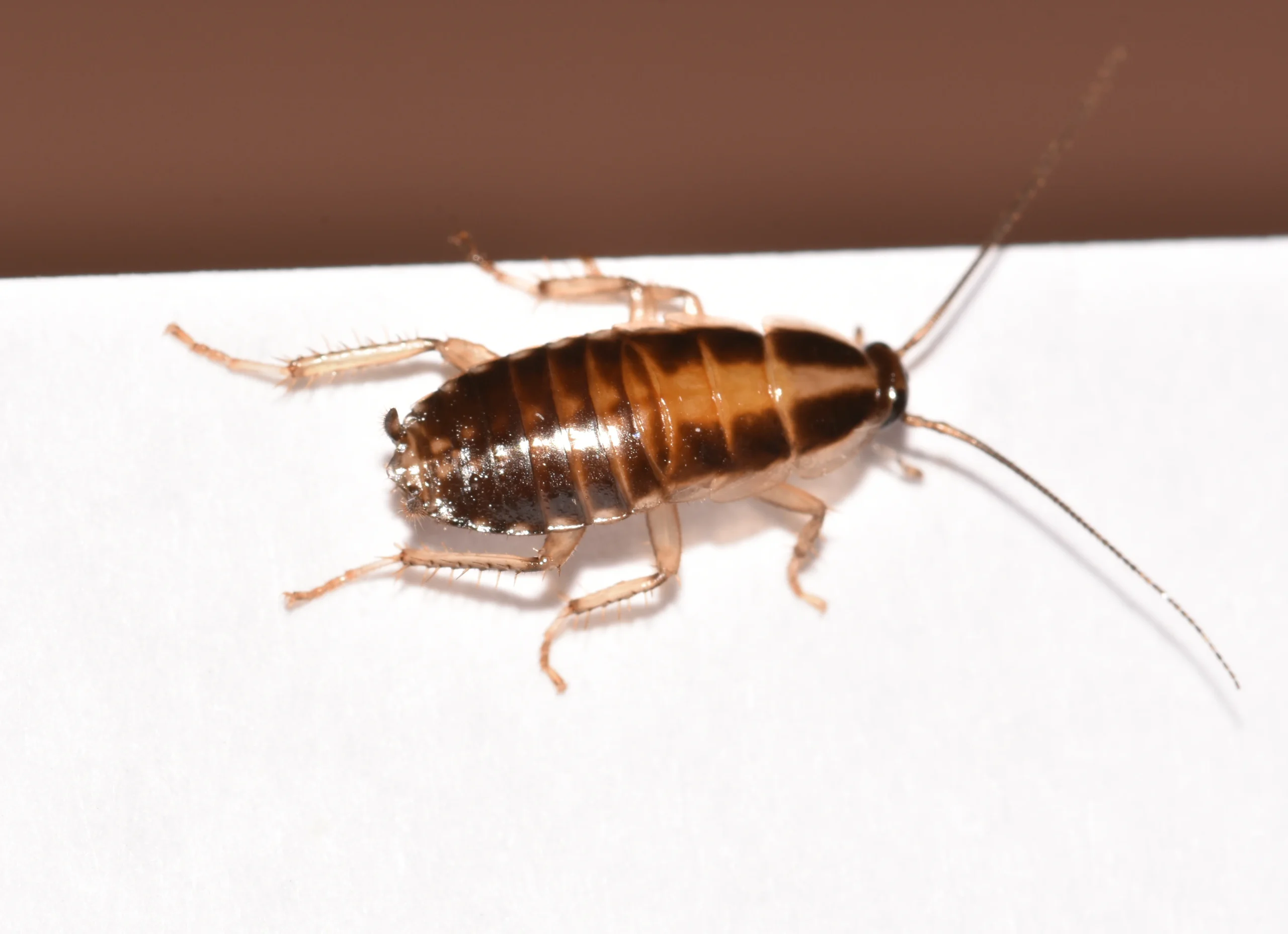
German Cockroach Profile
| Feature | Details |
| Scientific Name | Blattella germanica |
| Size | 13mm to 16mm (approx. 1/2 to 5/8 inch) |
| Other Names | Kitchen roach, Small brown roach |
Key Identification
German roaches are the most common cockroaches found in Florida homes, restaurants, and apartments.
- The “Racing Stripes”: Look for two dark, parallel stripes running down the “shield” (pronotum) just behind the head.
- Size: They are much smaller than the American Cockroach (Palmetto bug). If you see dozens of small roaches in the kitchen, they are likely German.
- Location: They are “thigmotactic,” meaning they like their bodies to be in contact with a surface on all sides. You will find them in the tightest cracks: behind backsplash tiles, in microwave electronics, and under refrigerator gaskets.
- Signs of Infestation: Look for “peppery” black specks (fecal droppings) in cabinet corners and small, tan, purse-shaped egg capsules (oothecae).
About German Roaches in Florida
The German Cockroach is a “hitchhiker.” They rarely walk into a house from the yard; instead, they are brought in via cardboard boxes, used appliances, or grocery bags.
In Florida, they are a major health concern. They are known to carry salmonella and E. coli, and their shed skins and droppings are a primary trigger for asthma and allergies, especially in children. Because a single female and her offspring can produce over 30,000 roaches in one year, “waiting and seeing” is never an option.
How to Treat
DIY “bug bombs” and hardware store sprays are almost never successful with German roaches because they cause scatter, driving the roaches deeper into the walls.
- Professional Baiting: We use high-grade gel baits that roaches find more attractive than actual food. They eat the bait and share it with others in hiding, creating a “domino effect” that kills the nest. The bait also passes through into the adult roach’s droppings, which the younger roaches then eat.
- Insect Growth Regulators: We apply growth regulators that act as birth control for the colony. Even if a roach survives the initial treatment, it will be unable to reproduce or molt correctly.
- Sanitation Audit: We work with you to identify “hot spots.” German roaches need three things: food, water, and heat. Fixing a leaky sink and sealing dry food in plastic containers “starves” them into eating our bait.
- Vacuuming & Flushing: For heavy infestations, we use HEPA-filter vacuums to physically remove the bulk of the population and specialized aerosols to “flush” them out of appliance motors and electronic housings.
Frequently Asked Questions About German Roaches
Why do I see roaches even when my kitchen is clean?
While cleanliness helps, German roaches are looking for moisture and warmth as much as food. They can live on the grease film behind a stove or the condensation on a refrigerator coil. In Florida’s humidity, even a “clean” house provides enough resources for them to thrive. If you have pets, do not leave water and food bowls out all day/night, only when needed.
Will “bug bombs” from the store work?
No. Foggers only kill the roaches that are out in the open. The produdcts used in bombs act as a repellent, causing the survivors to retreat into wall voids and electrical outlets where they are harder to kill, often making the infestation worse in the long run.
How many treatments are needed for German roaches?
Because their eggs (oothecae) are resistant to products, we typically recommend a minimum of two to three treatments spaced 30 days apart. Depending on the severity of activity, we may recommend on going treatment. This ensures we stop the newly hatched nymphs before they reach reproductive age.
Our Orlando Service Locations:
- Orlando
- Clermont
- Apopka
- Windermere
- St. Cloud
- Winter Garden
- Lake Buena Vista
- Kissimmee
- Sanford
- Davenport
- Oakland
- Minneola
- Lake Nona
- Ocoee
- Longwood
- Lake Mary
- Oviedo
- Winter Park
- Altamonte Springs
Our Southwest, FL Service Locations:
- Fort Myers
- Cape Coral
- Naples
- Babcock Ranch
- Lehigh Acres
- Ave Maria
- Estero
- Bonita Springs
- Marco Island
- Sanibel Island