

Earwigs
Earwig Profile
| Feature | Details |
| Scientific Name | Forficula auricularia (Common Earwig) & Labidura riparia (Striped Earwig) |
| Size | 12mm to 25mm (approx. 1/2 to 1 inch) |
| Other Names | Pincher bugs, Forceps bugs |
Key Identification
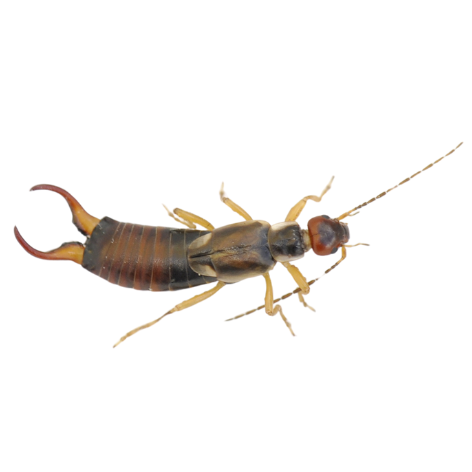
Earwigs are easily recognized by the prominent appendages on the end of their abdomen.
- The Pincers: Officially called “cerci,” these forceps-like pincers are used for defense and mating. Males have curved pincers, while females have straighter ones.
- Body Shape: They have elongated, flattened, reddish-brown bodies.
- Hidden Wings: Though they have wings, they rarely fly and are much more comfortable scurrying along the ground.
- The Scent: When crushed or threatened, some species can release a foul-smelling yellowish fluid as a defense mechanism.
About Earwigs in Florida
In Florida, earwigs are “occasional invaders.” They are nocturnal and spend their days hiding in damp, dark crevices—under mulch, in woodpiles, or beneath decorative stones.
They are scavengers that eat decaying plant matter and smaller insects. When Florida experiences a period of extreme drought or excessive saturation (common during hurricane season), they seek the stable environment inside your home, often appearing in kitchens, bathrooms, and laundry rooms.
How to Treat
The key to controlling earwigs is managing the environment around the foundation of the home.
- Moisture Management: This is the most critical step. Ensure gutters are clear and downspouts direct water at least 3 feet away from the house. In Florida, earwigs are almost always tied to high-moisture zones.
- Exterior Perimeter Barrier: We apply a targeted residual treatment around the foundation, doors, and window sills to intercept earwigs as they attempt to crawl inside.
- Mulch Maintenance: Thick layers of mulch right against the siding act as an “earwig nursery.” We recommend keeping mulch levels below 2 inches and leaving a small “dry zone” between the mulch and your home’s foundation.
- Entry Point Sealing: When finding cracks in the stucco, gaps in door frames, and entry points for utility lines, it is best practice to get these points sealed up. This will keep these flat-bodied pests from squeezing through.
Frequently Asked Questions About Earwigs
Do earwigs actually crawl into your ears and lay eggs?
No. This is an old wives’ tale with no basis in science. While earwigs love dark, narrow crevices, they have no interest in humans and do not seek out ears to crawl into or lay eggs.
Can earwigs bite or pinch humans?
Earwigs do not bite. They can use their pincers to “pinch” if you pick them up or squeeze them, but the pinch is generally weak and rarely breaks the skin. They are not venomous.
Why am I finding earwigs in my sink or bathtub?
Because earwigs are prone to drying out, they are naturally attracted to the high humidity and standing water found in sinks and tubs. In Florida, they often follow plumbing lines into these areas.
Our Orlando Service Locations:
- Orlando
- Clermont
- Apopka
- Windermere
- St. Cloud
- Winter Garden
- Lake Buena Vista
- Kissimmee
- Sanford
- Davenport
- Oakland
- Minneola
- Lake Nona
- Ocoee
- Longwood
- Lake Mary
- Oviedo
- Winter Park
- Altamonte Springs
Our Southwest, FL Service Locations:
- Fort Myers
- Cape Coral
- Naples
- Babcock Ranch
- Lehigh Acres
- Ave Maria
- Estero
- Bonita Springs
- Marco Island
- Sanibel Island