
Fleas
Flea Profile
| Feature | Details |
| Scientific Name | Ctenocephalides felis (Cat Flea – most common on both dogs and cats) |
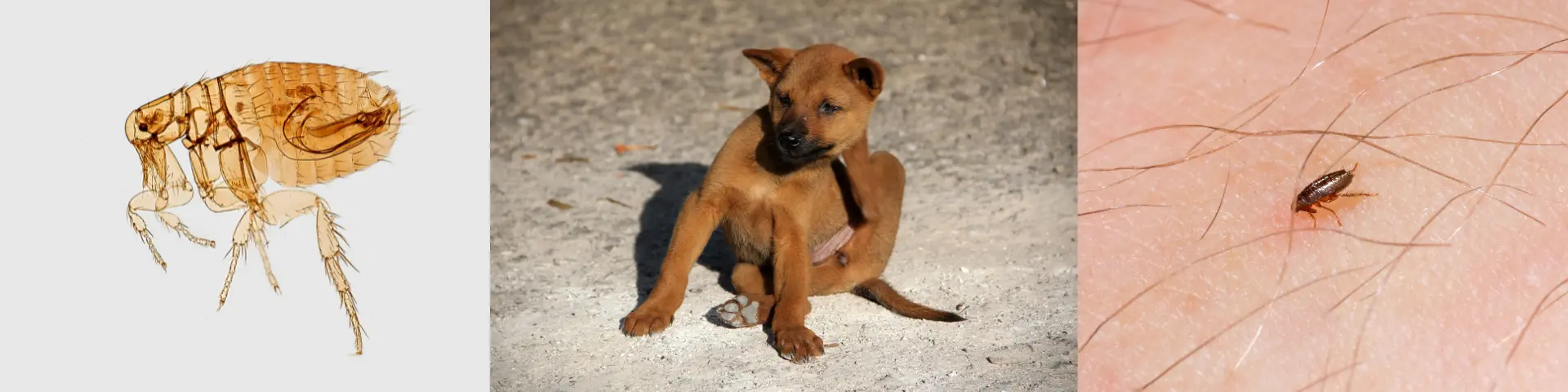
| Size | 1mm to 2mm (about the size of a pinhead) |
| Other Names | Sand fleas (though technically different, many Floridians use this term) |
Key Identification
Fleas are tiny, but their impact is huge. Look for these signs of an infestation:
- The “Jump”: Fleas are wingless but have incredible hind legs. If you see tiny black “seeds” jumping off your carpet or onto your socks, you have an infestation.
- Flea Dirt: Look for “pepper” like specks in pet bedding or on your pet’s skin. If you place these specks on a wet paper towel and they turn red, it is flea excrement (digested blood).
- Bites on Humans: Flea bites usually occur around the ankles and lower legs. They appear as small red bumps with a central “halo,” and they are intensely itchy.
- Physical Appearance: They are reddish-brown and flattened vertically (side-to-side), which allows them to move easily through thick pet hair.
About Fleas in Florida
Florida is the #1 state for flea activity because fleas thrive in high humidity and temperatures between 70°F and 85°F. While the adult fleas you see on your pet represent only 5% of the population, the other 95% are currently eggs, larvae, and pupae hiding in your rug, floorboards, and yard.
A female flea can lay up to 50 eggs per day. In Florida’s climate, these eggs can hatch and reach adulthood in as little as two weeks, meaning a small problem becomes a house-wide crisis almost overnight.
How to Treat
Effective Flea Control requires a “3-Point Attack” on the same day.
- Indoor Floor Treatment: We apply a specialized treatment that includes an insect growth regulator. This “birth control for bugs” stops eggs and larvae from ever reaching the biting adult stage.
- The “Vigorous” Vacuum: Before and after treatment, you must vacuum everything. The vibration from the vacuum encourages flea pupae to emerge from their cocoons, making them susceptible to our treatments. Daily vacuuming should continue for at least two weeks after a treatment, replacing the bag, or cleaning out the canister each time into the outside garbage.
- Yard Perimeter Barrier: In Florida, fleas live in “shady, sandy spots” in your yard. In addition to an interior treatment, we also offer an exterior treatment. We treat the perimeter of your home, especially shaded areas such as under trees to prevent pets from bringing new fleas inside.
- Pet Coordination: On the day we treat your home, your pet must be treated with a veterinarian-approved flea preventative, if not already. If on flea medication, consult your veterinarian about flea bath.
Frequently Asked Questions About Fleas
Why do I still see fleas after you treated my house?
This is normal and known as the “pupal window.” No product can penetrate the tough silk cocoon of a flea pupa. As they hatch over the next 14 days, they will come into contact with our residual treatment and die. Continued vacuuming is the key during this time – we recommend at least twice a day for two weeks.
Can fleas live in a house with only hardwood or tile floors?
Yes. While they love carpets, fleas in Florida often live in the cracks between floorboards, under baseboards, and in the debris found in the corners of tile floors.
I don’t have pets, so how did I get fleas?
Fleas often enter Florida yards on wildlife like opossums, raccoons, or stray cats. If these animals nest in your yard or near your door, fleas can easily hop onto your legs and hitch a ride inside.
Our Orlando Service Locations:
- Orlando
- Clermont
- Apopka
- Windermere
- St. Cloud
- Winter Garden
- Lake Buena Vista
- Kissimmee
- Sanford
- Davenport
- Oakland
- Minneola
- Lake Nona
- Ocoee
- Longwood
- Lake Mary
- Oviedo
- Winter Park
- Altamonte Springs
Our Southwest, FL Service Locations:
- Fort Myers
- Cape Coral
- Naples
- Babcock Ranch
- Lehigh Acres
- Ave Maria
- Estero
- Bonita Springs
- Marco Island
- Sanibel Island