
Hornets
Hornet Profile
| Feature | Details |
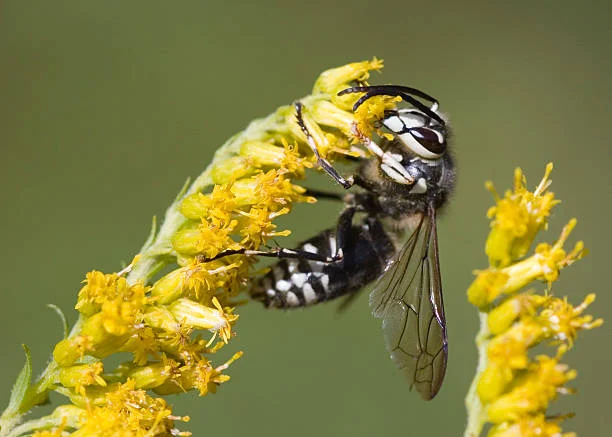
| Common Species | Bald-Faced Hornet |
| Size | 1 inch to 1.5 inches (significantly larger than yellowjackets) |
| Nest Type | Large, grey, “paper” nests (aerial or in hollow trees) |
Key Identification
Hornets are not as popular as wasps in Florida, but they do exist. Identifying the type of hornet is crucial for determining the level of aggression and the best treatment plan.
- Bald-Faced Hornet: These are jet black with distinct white or ivory markings on their face. They build the classic “football-shaped” paper nests in trees, shrubs, or under eaves.
- The Nest: Hornet nests are made from chewed wood fibers mixed with saliva, creating a grey, papery shell. Unlike a paper wasp nest, the “honeycomb” cells are hidden inside the outer shell.
- The “Guard”: Hornets often have “sentries” at the nest entrance. If you get within a few feet, they will signal an attack.
About Hornets in Florida
Hornets are protective of their colonies. While they are beneficial predators that eat flies and caterpillars, they become a major liability when they nest near doorways, playgrounds, or pool decks. A single hornet can sting multiple times because, unlike honeybees, their stinger is not barbed.
How to Treat
Never attempt to spray a hornet nest at night with a flashlight. European hornets are attracted to light and will fly directly toward you if you shine a beam on their nest.
- Protective Gear: Our technicians wear full-body suits with screened veils to ensure they can work safely without being stung.
- Pest Control: Ongoing pest control services gives peace of mind and removes these dangerous invaders from your home.
- Physical Extraction: Once the colony is neutralized, we can physically remove the nest and treat the area with a residual insecticide to prevent “scout” hornets from returning to the same spot.
Frequently Asked Questions About Hornets
Are hornets more dangerous than yellowjackets?
While both are aggressive, hornets are much larger and can inject more venom per sting. Because their nests are often higher up, they are less likely to be stepped on, but an attack from a hornet colony is generally more severe due to their size and speed.
What attracts hornets to my Florida home?
Hornets are attracted to sugar (fallen fruit or soda cans) and protein (other insects). They also love “unprotected” wood like cedar siding or weathered fences, which they use as raw material for their paper nests.
Can I use a “wasp spray” from the store?
Most store-bought sprays require you to be within 10–15 feet of the nest. This is well within the “strike zone” of a hornet. If you miss the queen or the entrance, the colony will swarm. Professional equipment allows us to treat from a much safer distance with higher-concentration materials.
Our Orlando Service Locations:
- Orlando
- Clermont
- Apopka
- Windermere
- St. Cloud
- Winter Garden
- Lake Buena Vista
- Kissimmee
- Sanford
- Davenport
- Oakland
- Minneola
- Lake Nona
- Ocoee
- Longwood
- Lake Mary
- Oviedo
- Winter Park
- Altamonte Springs
Our Southwest, FL Service Locations:
- Fort Myers
- Cape Coral
- Naples
- Babcock Ranch
- Lehigh Acres
- Ave Maria
- Estero
- Bonita Springs
- Marco Island
- Sanibel Island