

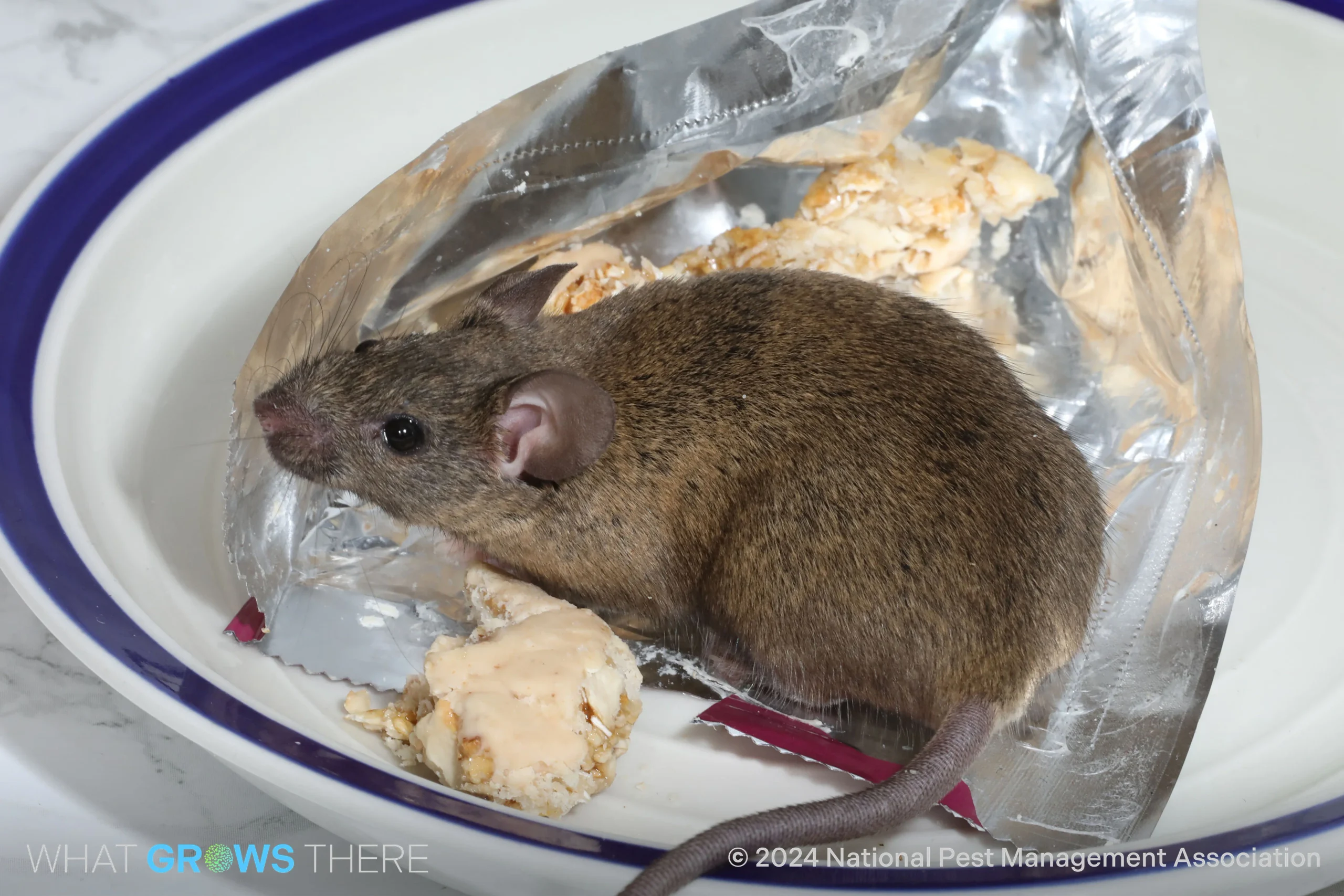
Mice
Mice in Florida
| Feature | Details |
| Common Species | House Mouse (Mus musculus) & Florida Mouse (Podomys floridanus) |
| Size | 2.5 to 3.7 inches (excluding the tail) |
| Reproduction | 5–10 litters per year; 6+ pups per litter |
Key Identification
Mice are small, but they leave big clues. Because they are nocturnal, you are more likely to see the evidence than the animal itself.
- Droppings: Mouse droppings are about the size of a grain of rice (3–6mm) and have pointed ends. (Rat droppings are larger and blunt-ended).
- Nesting Material: Look for shredded paper, insulation, or fabric in dark, quiet corners like kitchen cabinets, behind appliances, or in the attic.
- The “Micro” Entry: A mouse can squeeze through a hole the size of a dime (approx. 1/4 inch). If you can fit a pencil into a gap, a mouse can get inside.
- Rub Marks: Mice have oily fur. Over time, they leave dark, greasy smudge marks along baseboards and wall corners where they frequently travel.
About Mice in Florida
While the House Mouse is a year-round pest, the Florida Mouse is a unique native species found in our sandy ridges. However, it is the House Mouse that causes the most trouble.
In Florida, mice are often driven indoors by the extreme heat of summer, the heavy rains of hurricane season, or the colder nights of the Florida winter nights. Once inside, they pose a significant health risk. They are known to contaminate food surfaces with droppings and urine, and they are notorious for chewing through electrical wiring—a leading cause of house fires that many homeowners don’t realize are pest-related.
How to Treat
Mice are “nibblers” and very curious, which makes them different to treat than cautious rats.
- Comprehensive Exclusion: This is the most important step in Florida. We use steel wool, wire mesh, and industrial sealants to plug every gap around utility lines, AC conduits, and soffits.
- Strategic Trapping: We place mechanical traps along “runways”—the specific paths mice use to travel between their nest and food source.
- Vigilant Monitoring: Ongoing monitoring designed to detect and manage continued rodent pressure. The best preventative Rodent Control.
Frequently Asked Questions About Mice in Florida
I only saw one mouse. Do I really have an infestation?
Mice are social animals with a legendary reproductive rate. One female can have up to 60 pups in a single year. If you see one mouse during the day, it usually means the “safe” hiding spots are already full, indicating a larger population nearby.
Are mice dangerous to my Florida home?
Yes. Beyond the risk of diseases like Hantavirus and Salmonella, mice have teeth that never stop growing. They must chew constantly to wear them down, and they frequently choose the insulation on your home’s wiring, creating a major fire hazard.
Can I just use “ultrasonic” repellers?
Scientific studies have shown that ultrasonic devices have little to no long-term effect on rodent behavior. Mice quickly become “habituated” to the sound. Professional monitoring, exclusion and trapping are the only proven methods for total removal.
Our Orlando Service Locations:
- Orlando
- Clermont
- Apopka
- Windermere
- St. Cloud
- Winter Garden
- Lake Buena Vista
- Kissimmee
- Sanford
- Davenport
- Oakland
- Minneola
- Lake Nona
- Ocoee
- Longwood
- Lake Mary
- Oviedo
- Winter Park
- Altamonte Springs
Our Southwest, FL Service Locations:
- Fort Myers
- Cape Coral
- Naples
- Babcock Ranch
- Lehigh Acres
- Ave Maria
- Estero
- Bonita Springs
- Marco Island
- Sanibel Island