

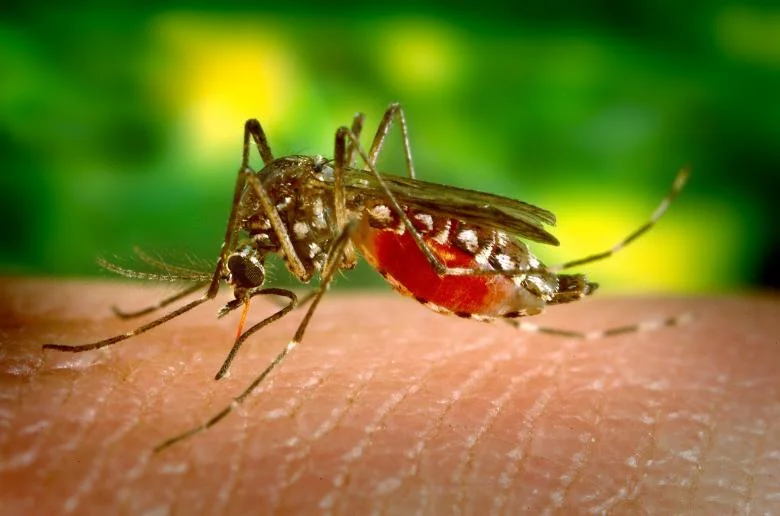
Mosquitoes
Mosquito Profile
| Feature | Details |
| Common Species | Aedes aegypti (Yellow Fever Mosquito) & Culex spp. |
| Active Season | Year-round; Peak from March to October |
| Breeding Site | Any standing water (as small as a bottle cap) |
Key Identification
While everyone knows what a mosquito looks like, Florida homeowners deal with specific “types” of infestations:
- The “Day-Biters”: In Florida, the Aedes mosquito is notorious for biting during the day, not just at dusk. They are identified by white markings on their legs.
- The “Floodwater” Swarms: After tropical storms or hurricanes, Florida experiences a surge in larger, aggressive “floodwater” mosquitoes that hatch in saturated fields.
- The “Z” Buzz: If you hear a high-pitched hum near your ears, the mosquito is already in strike range.
- Breeding Clues: Look for “wigglers” (larvae) in birdbaths, bromeliads, or clogged gutters.
About Mosquitoes in Florida
Florida is the perfect incubator for mosquitoes. With our daily afternoon thunderstorms and high humidity, even the most manicured yard can become a breeding ground.
Many Florida plants—specifically Bromeliads—are natural water-catchers that can hold enough water to hatch hundreds of mosquitoes right on your patio. Beyond the “itch,” mosquitoes are the deadliest animals on earth. In Florida, protecting your yard is the first line of defense against mosquito-borne illnesses that affect both humans and four-legged family members.
How to Treat
Effective mosquito control requires a “Barrier + Breeding” approach. We don’t just take out the flyers; we stop the next generation.
- Barrier Fogging/Misting: We apply a professional-grade residual solutions to the underside of leaves and shaded areas where mosquitoes rest during the heat of the day. This creates a “shield” around your property.
- Source Reduction: Identify hidden water collectors like plant saucers, planting pots, and tarps, and make sure they are clear of standing water.
- Inversion Traps: For long-term control, we can install specialized traps that lure and capture female mosquitoes before they can lay eggs.
Frequently Asked Questions About Florida Mosquitoes
Why do I have mosquitoes even though I don’t have a pool?
You don’t need a pool! In Florida, the “Tiger Mosquito” can breed in a discarded soda can, a dog bowl, or even the small amount of water trapped in the “cup” of a tropical plant. If it holds water for more than 4 days, it’s a mosquito nursery.
Are your mosquito treatments safe for bees and butterflies?
We take “Pollinator Protection” seriously. We avoid treating flowering plants where bees forage and we time our applications when beneficial insects are less active.
Does the “Big Truck” (County Spraying) solve my problem?
County mosquito control is great for reducing the overall population in a neighborhood, but it doesn’t reach the “micro-habitats” in your specific backyard. Our service provides a targeted, long-lasting barrier.
Our Orlando Service Locations:
- Orlando
- Clermont
- Apopka
- Windermere
- St. Cloud
- Winter Garden
- Lake Buena Vista
- Kissimmee
- Sanford
- Davenport
- Oakland
- Minneola
- Lake Nona
- Ocoee
- Longwood
- Lake Mary
- Oviedo
- Winter Park
- Altamonte Springs
Our Southwest, FL Service Locations:
- Fort Myers
- Cape Coral
- Naples
- Babcock Ranch
- Lehigh Acres
- Ave Maria
- Estero
- Bonita Springs
- Marco Island
- Sanibel Island