
Subterranean Termites
Subterranean Termite Profile
| Feature | Details |
| Scientific Name | Reticulitermes spp. & Coptotermes formosanus |
| Colony Size | 60,000 to over 1 million members |
| Damage Potential | Can cause significant structural damage in months, not years |
Key Identification
Subterranean termites are rarely seen until they swarm or until damage is uncovered during a renovation.
- Mud Tubes: These are pencil-thin tunnels made of soil and saliva. You’ll find them climbing up foundation walls, inside crawl spaces, or along floorboards. They act as “humidity-controlled highways.”
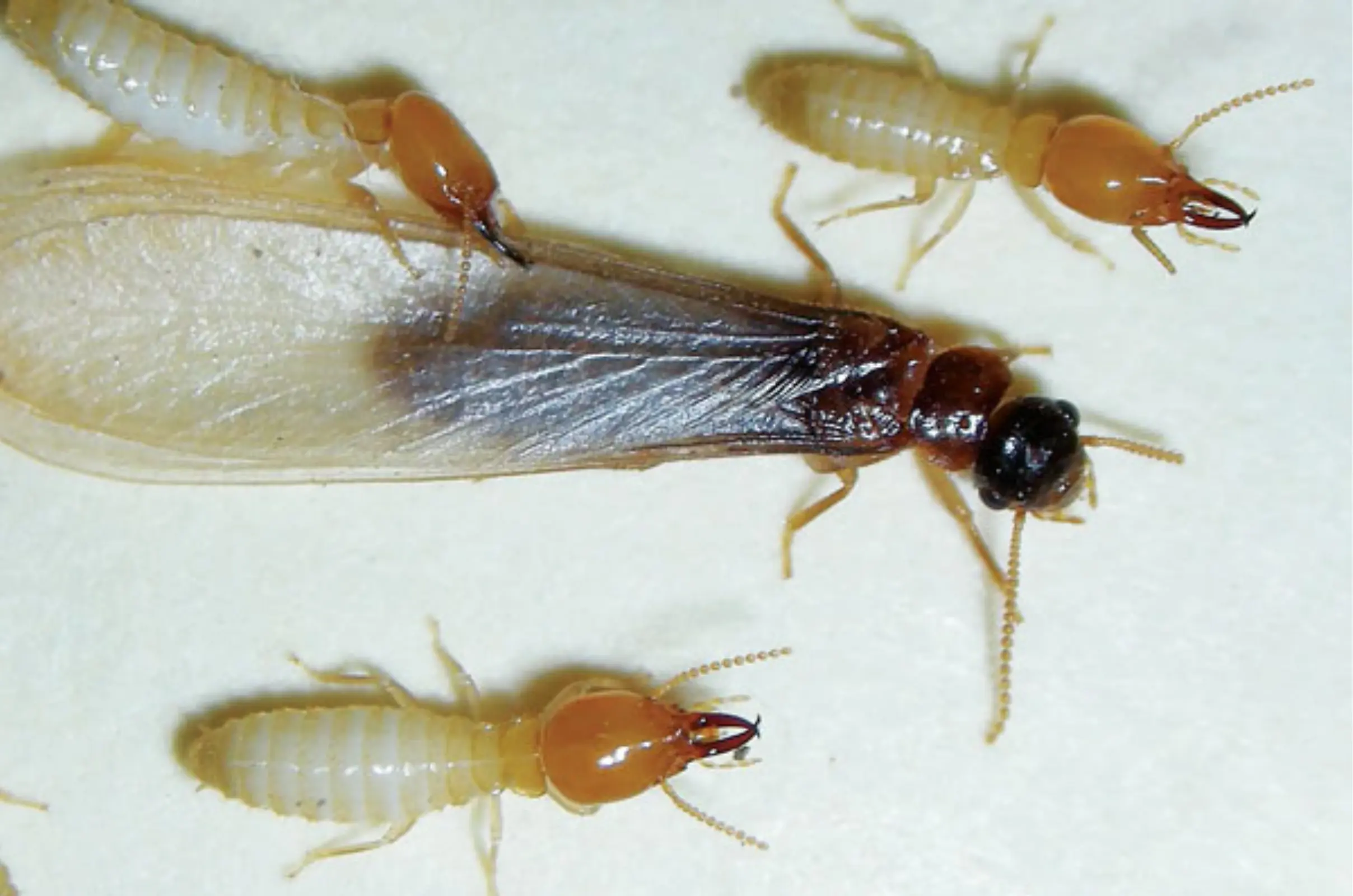
- The Swarm: Usually occurring after a spring rain, “swarmers” (winged termites) fly out to start new colonies. If you see hundreds of discarded, equal-length wings on your windowsills, you have an active colony nearby.
- Damaged Wood: Unlike drywood termites, subterranean termites pack their galleries with “moist soil” or “carton” (a mix of chewed wood and excrement). The wood will often look layered, like the pages of a book.
- The Piles: Look for “shelter tubes” hanging from floor joists or appearing in the corners of garages.
About the Formosan “Super Termite”
Southwest and Central Florida are hotspots for the Formosan Subterranean Termite. They are known as “super termites” because their colonies are massive. While a native subterranean colony might eat a few feet of a 2×4 in a year, a Formosan colony can cause major structural damage in as little as six months. They can even bypass “termite shields” and create secondary nests (aerial nests) on roofs if there is a persistent leak.
How to Treat
In Florida, subterranean termite protection is not a DIY project. It requires professional-grade equipment and specialized chemistry to reach the “heart” of the colony in the soil.
- Baiting Systems (Sentricon®): We install discreet bait stations in the ground around your home. Termites prefer this bait over wood. Once they eat it, the bait prevents them from molting, causing the entire colony—including the queen—to collapse.
- Pretreatments: When it comes to treating the home or commercial property while being built, we offer a pretreatment that covers the trench areas.
- WDO (Wood Destroying Organisms) Inspections: Termite bonds are essential in Florida. We perform “WDO” (Wood Destroying Organism) inspections to ensure your barrier remains intact and your home stays protected.
Frequently Asked Questions About Subterranean Termites in Florida
Does homeowner’s insurance cover termite damage?
Almost never. In Florida, termite damage is considered “preventable maintenance” and is excluded from standard policies. This is why we offer a $1 million repair termite warranty for Florida homeowners in the greater Fort Myers, Naples, and Orlando areas.
What is the difference between a swarming ant and a termite?
Termites have straight antennae, a thick waist, and four wings of equal length. Ants have elbowed antennae, a pinched “wasp” waist, and two sets of wings that are different sizes.
I have a brick-on-slab home. Am I safe?
No. Subterranean termites don’t eat brick, but they can crawl through a crack in your slab as thin as a business card. Once inside, they have direct access to your baseboards, wall studs, attics, and kitchen cabinets.
Our Orlando Service Locations:
- Orlando
- Clermont
- Apopka
- Windermere
- St. Cloud
- Winter Garden
- Lake Buena Vista
- Kissimmee
- Sanford
- Davenport
- Oakland
- Minneola
- Lake Nona
- Ocoee
- Longwood
- Lake Mary
- Oviedo
- Winter Park
- Altamonte Springs
Our Southwest, FL Service Locations:
- Fort Myers
- Cape Coral
- Naples
- Babcock Ranch
- Lehigh Acres
- Ave Maria
- Estero
- Bonita Springs
- Marco Island
- Sanibel Island