
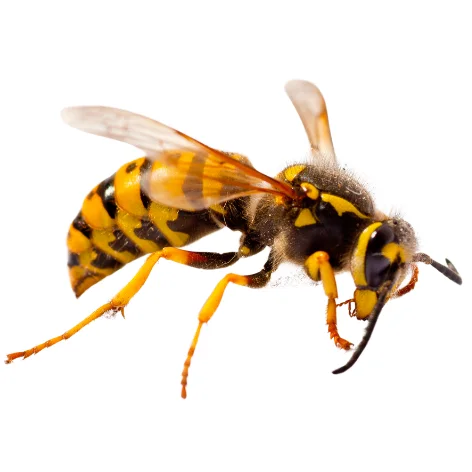
Wasps
Wasp Profile
| Feature | Details |
| Common Species | Paper Wasps, Yellowjackets, Red Wasps |
| Nest Type | Umbrella-shaped (open cell) or enclosed paper nests |
| Behavior | Defensive; can sting multiple times |
Key Identification
Identifying the type of wasp is the first step in determining the risk level to your family.
- Paper Wasps: These are the most common. They have long legs that dangle when they fly and build “umbrella” nests with visible open honeycombs. They are generally less aggressive but will sting if the nest is touched.
- Yellowjackets: Often confused with bees, these are smaller, faster, and much more aggressive. They often nest in the ground or inside wall voids. If you see “bees” coming out of a hole in the lawn, they are likely yellowjackets.
- Red Wasps: Large and intimidating, these are common in Florida’s rural and suburban areas. They are known for a very painful sting and tend to nest in high eaves or inside attic vents.
- The “Wait and See” Sign: If you see a single wasp hovering near a specific spot on your eaves repeatedly, she is likely starting a new nest.
About Wasps in Florida
Because Florida lacks a “hard freeze,” wasp season never truly ends. Wasps love the “limestone” texture of stucco and the sheltered corners of our pool enclosures.
A major issue for Florida homeowners is the “Hidden Nest.” Wasps frequently enter through gaps in soffits or behind shutters, building large colonies inside the walls of the home. This can lead to wasps accidentally entering the living space through recessed lighting or electrical outlets.
How to Treat
DIY “wasp freeze” sprays can be dangerous because they often only kill the wasps they hit, causing the rest of the colony to swarm in defense.
- Protective Equipment: Our technicians use professional suits and veils when necessary, allowing them to get close enough to the nest to ensure a 100% kill rate without being stung.
- Residual Liquid Barriers: We treat the eaves and “overhangs” of your home with a solution that leaves a long-lasting residue.
- Nest Removal: We don’t just kill the wasps; we remove the nests. This prevents the “scent” of the old nest from attracting other pests or future wasp queens.
Frequently Asked Questions about Wasps
Why do wasps keep building nests on my pool cage?
Your pool enclosure is a perfect structural frame. It provides height, protection from the wind, and a steady supply of “prey” insects that are attracted to the pool water and lighting. This can also indicate that there is a good chance you have an opening in the pool cage screen.
Are wasp stings dangerous?
For most people, a sting results in localized pain and swelling. However, because wasps can sting multiple times, they can deliver a large amount of venom. For those with allergies, this can lead to anaphylactic shock, making professional removal a must.
Should I spray a ground nest with a garden hose?
No. Flooding a yellowjacket nest will only agitate the colony. They have multiple tunnels and exit points; they will fly out and attack the source of the water (you) almost immediately.
Our Orlando Service Locations:
- Orlando
- Clermont
- Apopka
- Windermere
- St. Cloud
- Winter Garden
- Lake Buena Vista
- Kissimmee
- Sanford
- Davenport
- Oakland
- Minneola
- Lake Nona
- Ocoee
- Longwood
- Lake Mary
- Oviedo
- Winter Park
- Altamonte Springs
Our Southwest, FL Service Locations:
- Fort Myers
- Cape Coral
- Naples
- Babcock Ranch
- Lehigh Acres
- Ave Maria
- Estero
- Bonita Springs
- Marco Island
- Sanibel Island