
Florida Guide: How to Get Rid of Spiders in Your Pool Cage for Good
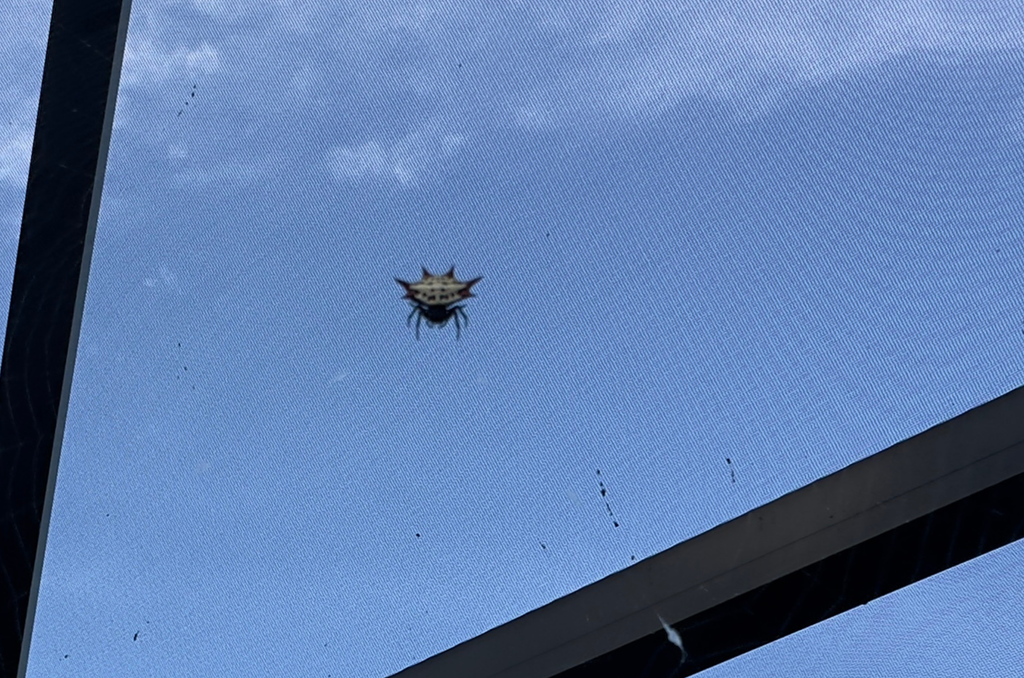
Getting rid of spiders in a pool cage for good means treating the entire enclosure — screens, beams, and corners — top to bottom, along with the egg sacs hiding inside it. Brushing down webs or spraying a store-bought can only knocks back what you can see; it doesn’t stop the eggs from hatching, so the cage fills back in within days.
One of our customers was severely allergic to spiders, and by the time we arrived, their pool cage looked like something out of a horror movie — webs blanketing every screen and beam, egg sacs clustered in the corners, spiders everywhere. After a full professional treatment, the cage was completely transformed. They have been with us five years now and finally enjoys their outdoor space without fear.
If your pool cage keeps filling back up no matter what you try, here’s why that happens — and what actually works.
Why Do Spiders Keep Getting Into Pool Cages?
The pool itself is part of the problem. Pool water attracts flying insects — mosquitoes, no-see-ums, gnats — and those insects are a direct food source for spiders. A screened pool cage gives them both a buffet and built-in shelter, which is why our guide to getting rid of spiders covers pool cages as one of the top hot spots in Florida homes.
Activity peaks in the hotter months. More heat and humidity means more insects, which means more spiders — consistently our busiest season for pool cage calls.
The Spiders You’re Most Likely to Find
The species we see most often in Florida pool cages are golden silk orb-weavers (commonly called banana spiders), along with black widows, crab spiders, and brown widows. Our guide to venomous spiders in Florida breaks down how to tell these apart and what their bites actually do.
The good news: if you’re picturing a brown recluse, that’s almost certainly not what’s in your cage. According to the University of Florida, no breeding populations of any recluse species have been found in the state — brown recluse bites are essentially unheard of here. What’s really building webs in your screens is far more likely to be a crab spider, brown widow, black widow, an orb-weaver, or garden spiders.
Why Brushing Down Webs Makes the Problem Worse
This is the mistake almost every homeowner makes. Brushing down webs doesn’t eliminate an infestation — it resets the clock. Within days, everything’s back.
The reason: egg sacs. A single sac can typically hold hundreds of spiderlings, and if it’s left untreated, they hatch faster than you will notice.
Over-the-counter sprays don’t solve this either. They lack the residual strength to survive Florida’s rain. General pest companies that claim to handle pool cages often only spray about four feet up from the bottom, leaving the entire upper structure — where most of the webbing actually is — untreated. The reason we differ, is because we treat your pool cage with solutions from top to bottom.
What Actually Works: Professional Pool Cage Spider Treatment
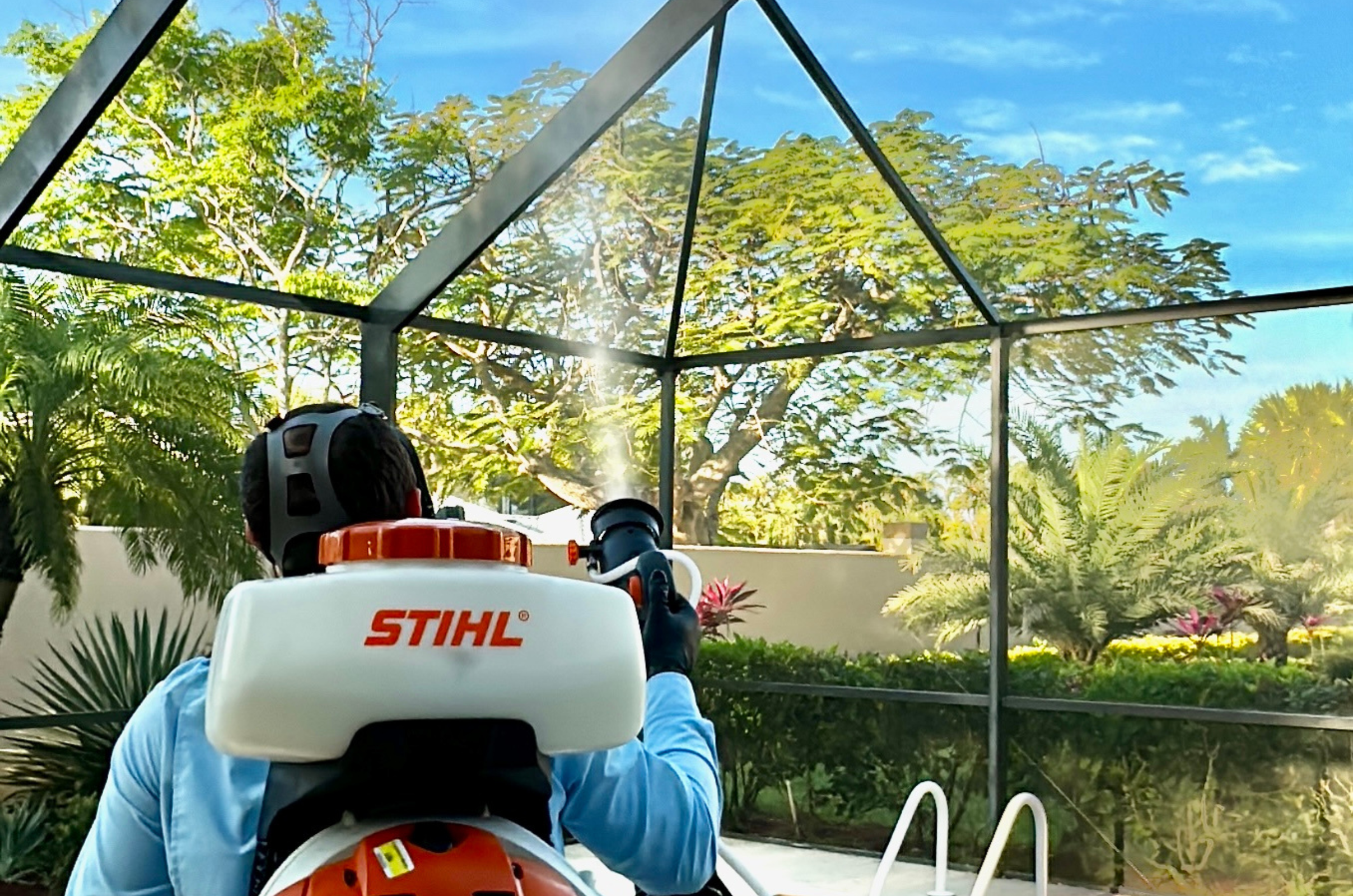
Spider control for a pool cage isn’t the same as a standard pest control visit. A proper treatment covers every screen and beam from top to bottom, not just the lower few feet. When the solution contacts spiders, they begin falling from their webs immediately — we watch it work in real time.
Egg sacs get coated too, so any spiderlings that do hatch are eliminated shortly after. That’s the part of the cycle over-the-counter products can’t break.
We get a lot of questions about pets, children, and family being able to access their screen enclosure after the treatment. Once the product dries — typically 30 to 60 minutes — family, kids and pets can move freely through the area again.
What It Costs and How Long It Lasts
Pricing depends on the size of your pool cage, how bad the current activity is, and how often you want treatments. For a full breakdown of what goes into the price, see our guide to how much spider control costs.
Treatment longevity varies with rain, humidity, and pest pressure, which is why ongoing service — not a one-time spray — is what actually keeps a pool cage spider-free. We guarantee your cage will be spider-free by the third visit as long as the screens are in tact.
The Biggest Mistake After Spider Removal
After a professional treatment, reaching for a store-bought spray is the worst thing you can do. Over-the-counter products break down our residual solution and cut the treatment short.
If you spot a spider between visits, give us a call instead of spraying over the treatment — we’ll come take a look.
Stop Fighting the Same Battle Every Week
Getting rid of spiders in your pool cage for good takes more than brushing down webs — it takes full-coverage treatment that handles adults, eggs, and ongoing prevention together. Florida pests don’t take a season off, which is why year-round maintenance is the only approach that actually lasts.
Seasonal Florida owner? No problem! We can still treat the pool cage during the months you are not home.
If you’re ready to stop dealing with this every week, reach out for a consultation and we’ll walk you through exactly what your pool cage needs. Call (239) 208-9918 (Fort Myers, Naples, Cape Coral) or (407) 537-9357 (Orlando, Clermont, Apopka, Windermere).
Frequently Asked Questions
Can I still use my pool during or after spider treatment?
Yes. Technicians avoid applying product directly to pool water, so once the treated surfaces dry — usually 30 to 60 minutes — the pool and surrounding deck are fine to use normally.
Is pool cage spider treatment safe for kids and pets?
Yes. Once the treated screens and beams have fully dried, kids and pets can return to the area without restriction.
How soon can I power wash my pool cage after treatment?
Always pressure wash before the treatment is completed. This allows for optimal effects of solutions.
Are the spiders in my pool cage dangerous?
Often venomous, rarely aggressive. Black widows and brown widows are the two venomous species we most commonly find in Florida pool cages, and both are shy and only bite when trapped or provoked. Brown recluses, despite their reputation, aren’t established in Florida and are very unlikely to be what you’re seeing.
What’s the difference between general pest control and advanced spider service treatment?
General pest control treats the entry points and perimeter of your home and helps keep spiders out of doorways and soffits. Pool cage spider treatment covers the entire screened enclosure — top to bottom — targeting the webs, egg sacs, and hiding spots that general service doesn’t reach. This service is more time consuming and niche to ensure you stay spider free compared to other companies.
Our Orlando Service Locations:
- Orlando
- Clermont
- Apopka
- Windermere
- St. Cloud
- Winter Garden
- Lake Buena Vista
- Kissimmee
- Sanford
- Davenport
- Oakland
- Minneola
- Lake Nona
- Ocoee
- Longwood
- Lake Mary
- Oviedo
- Winter Park
- Altamonte Springs
Our Southwest, FL Service Locations:
- Fort Myers
- Cape Coral
- Naples
- Babcock Ranch
- Lehigh Acres
- Ave Maria
- Estero
- Bonita Springs
- Marco Island
- Sanibel Island